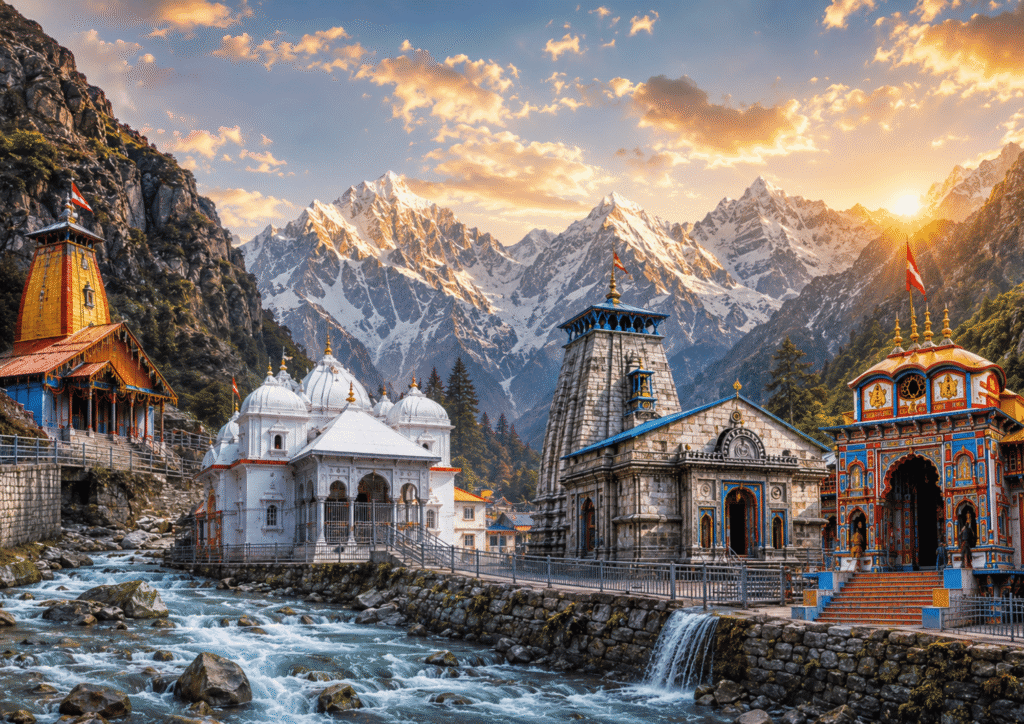
Uttarakhand is the one Indian destination where a single missed permit or one unqualified driver can end a group’s itinerary on the road. For travel agents, the ground partner decides whether a Char Dham or Kumaon booking is a profitable repeat client or a refund request. This guide explains how a specialized Uttarakhand B2B transport DMC removes those risks, what wholesale net rates look like in 2026, and how agents can build 20% to 32% margins on every vehicle they sell.
Why Uttarakhand Ground Logistics Require a Specialized B2B DMC
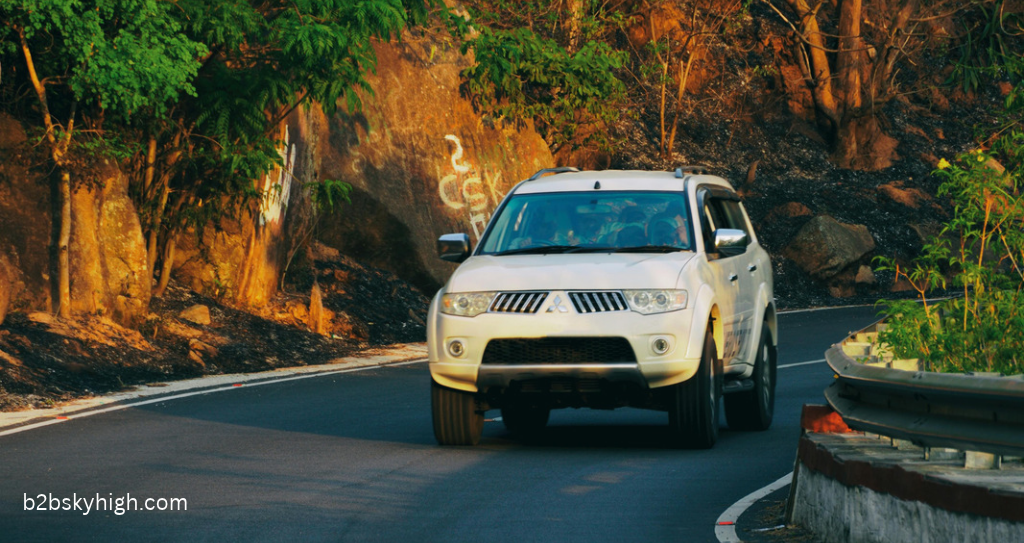
Uttarakhand transport is not plains logistics at a higher price. Roads climb 3,000 metres within a day, lanes are often single-width, and a vehicle that is fine in Delhi can fail on the first 12-degree incline past Rishikesh. A general-purpose operator who treats a Kedarnath movement like a Jaipur transfer will eventually leave your group stranded.
Garhwal Yatra routes versus Kumaon hill circuits
The two regions behave differently and need different fleet planning.
- Garhwal (Char Dham, Rishikesh, Mussoorie, Chopta, Auli): The Yatra corridor runs along the Ganga, Yamuna, Mandakini and Alaknanda valleys. Stretches such as Barkot to Janki Chatti, Guptkashi to Sonprayag and Joshimath to Badrinath carry heavy two-way pilgrim traffic, narrow carriageway and frequent traffic holds. Daily distances look short on a map, yet 180 km can take nine hours.
- Kumaon (Nainital, Bhimtal, Mukteshwar, Kausani, Almora, Corbett): These circuits are gentler and more leisure-oriented, but they have steep ghat sections, tight hairpins on the Bhowali to Almora and Kausani approaches, and fog from November onward. Larger vehicles must be matched carefully to the road, since some resort lanes cannot take a 26-seater.
Monsoon landslide risk
From late June to mid-September, landslides and road washouts are routine on the Rishikesh to Badrinath and Rishikesh to Gangotri routes. Debris clearance can close a stretch for hours or days. A competent DMC monitors district road status daily, holds buffer days in Yatra itineraries and has a standing re-routing plan, because an agent cannot reschedule a group of 40 pilgrims from a hotel lobby in Pipalkoti.
Regulation is tightly enforced
The state Transport Department, district administrations and the Char Dham registration system control which commercial vehicles may enter Yatra routes and when. Out-of-state taxis without the right entries are turned back at checkposts, even with confirmed paying passengers aboard. Vehicle mechanical fitness is also checked at plains-to-hills transition points, and brake, tyre and cooling-system condition decide whether a vehicle should be on a ghat road at all.
What this means for agents
An agent selling Uttarakhand needs a partner that owns or directly controls hill-certified vehicles, pre-clears paperwork before departure and keeps a dispatcher awake while the group is on the road. A broker who forwards your booking to a local taxi union provides none of that, and every failure still lands on your brand.
Top Ground Operational Pain Points for Travel Agents and Sky High Solutions
These five problems account for most escalations that agents bring to us after a bad experience elsewhere. Each has a specific operational answer.
Pain point 1: Green Card and Trip Card delays at checkpoints
A vehicle without valid Char Dham clearance is held or turned back, and a delay of three hours at Haridwar or Barkot can cascade into a missed darshan slot. Sky High solution: every Yatra vehicle is registered on the state portal (greencard.uk.gov.in) before the booking date, and the Trip Card is generated against the confirmed passenger list before departure. The driver carries digital and printed copies, so the vehicle clears checkpoints without improvisation.
Pain point 2: Night driving bans and highway checkpost stops
Hill roads restrict commercial vehicle movement during the night window, and drivers who try to beat the clock create both safety and legal exposure. Sky High solution: we plan every itinerary around the government-mandated 10 PM to 4 AM commercial vehicle restriction. Night halts are pre-booked at the right town, not improvised when a vehicle is stopped at a checkpost. Departure times for early darshan routes are set so the group is never racing the ban.
Pain point 3: Unqualified drivers on mountain roads
A driver who has never taken a 26-seater down the Badrinath descent is a liability regardless of how confident he sounds. Sky High solution: 100% of our drivers are vetted local professionals holding a valid Hill Endorsement on their licence, with mountain safety training and a record of Yatra-route runs. Vehicles are inspected for brakes, tyres and cooling before every hill departure.
Pain point 4: Direct client flipping and driver misconduct
The quiet fear of every agent is that a driver hands over his number to the guest, and the next trip is booked directly at your cost. Sky High solution: a strict 100% white-label policy. Vehicles are unbranded, drivers sign NDAs covering client contact and commercial discussion, and we hold agent-branded logo signboards at Dehradun Jolly Grant Airport (DED) and Haridwar station so the guest meets your brand, not ours.
Pain point 5: Pure Veg and Jain meal coordination in remote hills
On the Yatra route, a Jain family or a strictly vegetarian group can find its options reduced to whatever a roadside dhaba offers. Sky High solution: pre-booked, verified, hygienic Pure Veg and Jain dining stops along the Yatra and Kumaon corridors. The stop list is fixed at quotation stage, shared with the agent and confirmed with the restaurant 24 hours before the group arrives.
How the five fixes work together
None of these fixes is complicated, but all of them depend on the DMC controlling its own fleet and drivers. Where an operator subcontracts vehicles by the day, paperwork, driver quality and client protection all become somebody else’s problem. Direct fleet management is the thread through every solution above.
B2B Fleet and Net Rate Tariff Comparison Matrix
The 2026 wholesale net rates below are per vehicle, in INR, for vehicle plus driver. Inclusions such as driver allowance, tolls, parking and Green Tax are itemised on each quotation, so compare like with like before you price. The capacity column shows what we recommend on hill roads with luggage, which is lower than the registration seating.
| Category | Hill-safe pax + luggage | Airport / station transfer (DED, Haridwar, Rishikesh) | Local day tour (per day) | Do Dham 5N/6D | Char Dham 9N/10D | Kumaon circuit 5N/6D |
|---|---|---|---|---|---|---|
| Commercial Sedan (Dzire / Etios) | 3 pax, 2 large + 2 small bags | ₹1,800 – ₹2,500 | ₹3,200 – ₹4,200 | Not recommended | Not recommended | ₹22,000 – ₹27,000 |
| Executive SUV (Innova Crysta) | 5 to 6 pax, 3 large + 3 small bags | ₹2,800 – ₹3,800 | ₹4,800 – ₹6,200 | ₹28,000 – ₹35,000 | ₹48,000 – ₹60,000 | ₹32,000 – ₹40,000 |
| Force Tempo Traveller 12 / 17-seater | 10 to 12 pax in the 12-seater, 14 to 15 pax in the 17-seater, with rooftop or rear luggage space | ₹4,200 – ₹5,800 | ₹7,500 – ₹9,800 | ₹44,000 – ₹55,000 | ₹75,000 – ₹92,000 | ₹48,000 – ₹62,000 |
| Force Urbania / Luxury Coach (26 to 35 seater) | 22 to 30 pax, hand luggage plus one bag each | On request | On request | ₹68,000 – ₹88,000 | ₹1,15,000 – ₹1,42,000 | On request |
Larger 27 to 45-seater luxury coaches are quoted per sector for MICE and wedding movements, because road width at the destination decides whether the vehicle can be used at all. The 26-seater tempo-class vehicle is the largest we recommend for the upper Yatra stretches.
Recommended retail prices and agent margins
Agents typically price Uttarakhand transport at a margin of 20% to 32% on the selling price. The table below uses the midpoint of each net range and shows the suggested retail price at the low, mid and high end of that band. Margin here equals (RRP minus net) divided by RRP.
| Service (midpoint net) | Net rate | RRP at 20% margin | RRP at 26% margin | RRP at 32% margin |
|---|---|---|---|---|
| Airport transfer, Sedan | ₹2,150 | ₹2,700 | ₹2,900 | ₹3,150 |
| Airport transfer, Innova Crysta | ₹3,300 | ₹4,100 | ₹4,450 | ₹4,850 |
| Airport transfer, Tempo Traveller | ₹5,000 | ₹6,250 | ₹6,750 | ₹7,350 |
| Kumaon circuit, Sedan | ₹24,500 | ₹30,600 | ₹33,100 | ₹36,000 |
| Do Dham, Innova Crysta | ₹31,500 | ₹39,400 | ₹42,600 | ₹46,300 |
| Char Dham, Innova Crysta | ₹54,000 | ₹67,500 | ₹73,000 | ₹79,400 |
| Char Dham, Tempo Traveller | ₹83,500 | ₹1,04,400 | ₹1,12,800 | ₹1,22,800 |
| Char Dham, Urbania / Luxury Coach | ₹1,28,500 | ₹1,60,600 | ₹1,73,600 | ₹1,89,000 |
How to read the matrix
- Short transfers carry the thinnest absolute margin. A sedan transfer earns a few hundred rupees, so sell it as part of a package rather than on its own.
- Char Dham and coach movements carry the largest rupee margin. At the 26% level, a single Tempo Traveller Char Dham booking leaves roughly ₹29,000 for the agent.
- Group size changes the cheapest option. For a family of 10 or more, one Tempo Traveller usually costs less per head than two Innova Crystas, and it keeps the group together at checkpoints.
- Peak-season pricing moves. May, June, September and October pilgrimage peaks tighten availability, so confirm the net rate at quotation date rather than relying on this table.
Regional Circuit and Route Guide for Uttarakhand Ground Logistics
Three circuits cover most of what agents sell. Each has its own rhythm, vehicle needs and failure points.
Circuit 1: Char Dham pilgrimage corridor
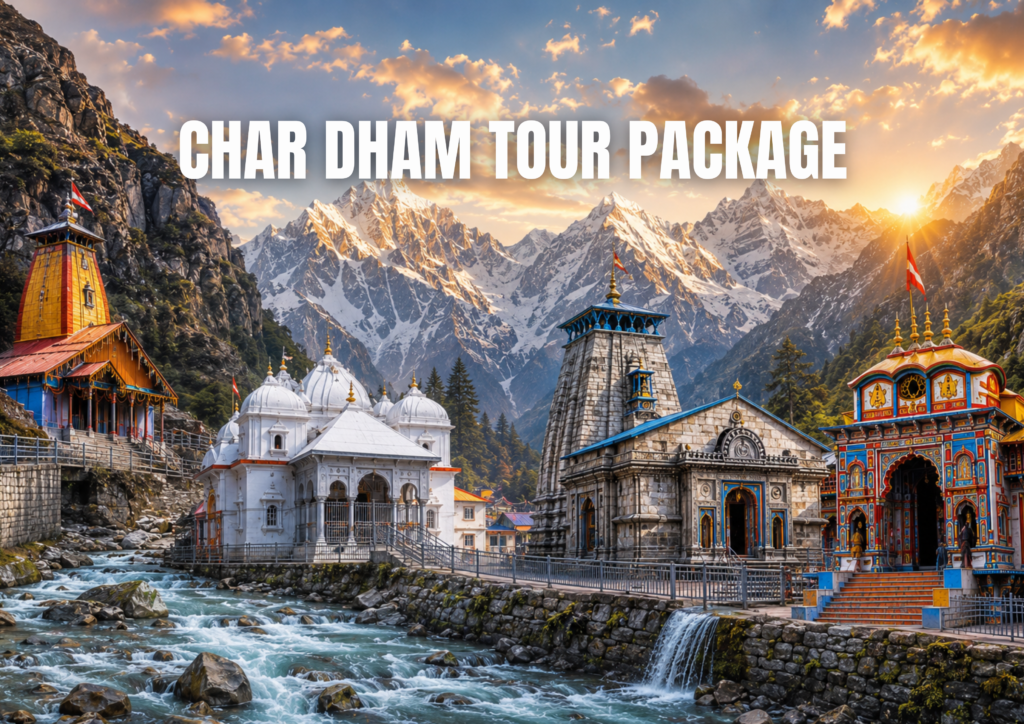
Route: Haridwar or Dehradun to Barkot (Yamunotri), Uttarkashi (Gangotri), Guptkashi or Phata (Kedarnath) and Pipalkoti or Joshimath (Badrinath), then back to Haridwar.
- Yamunotri leg: The road ends at Janki Chatti, with a trek or pony ride onward. Barkot is the standard night halt, and the Dehradun to Barkot run through Mussoorie and Naugaon is a full day.
- Gangotri leg: Barkot to Uttarkashi is a short drive, with Uttarkashi to Gangotri the longer second day. Weather closures near Harsil can reshuffle the day.
- Kedarnath leg: Vehicles stop at Sonprayag, from where pilgrims reach Gaurikund and then trek, ride or fly. Guptkashi is the practical base for the Sonprayag run, so plan the vehicle to wait or return according to the group’s plan.
- Badrinath leg: Rudraprayag, Karnaprayag and Pipalkoti lead to Joshimath and Badrinath. Gate-closing hours and traffic holds mean early departures matter here.
Vehicle guidance: Innova Crysta for families of up to six, Tempo Traveller for groups of 10 to 15, and the 26-seater class for organised yatra batches on the lower sectors. For a full Char Dham in nine nights, keep one buffer day in the plan whenever the group includes elderly pilgrims.
Circuit 2: Garhwal leisure and adventure circuit
Route: Dehradun, Mussoorie, Rishikesh, Haridwar, Tehri, Chopta and Auli.
- Dehradun and Mussoorie: Short transfers from Jolly Grant, and a good first night for incoming groups. Mall Road areas are restricted for vehicles, so plan the drop-off point in advance.
- Rishikesh and Haridwar: The base for rafting, yoga and Ganga Aarti programmes, and a natural start point for any Yatra movement. Local sightseeing is typically done on a day-rate basis.
- Tehri: Lake activities and the dam viewpoint, a convenient half-day stop on the way to the upper hills.
- Chopta and Auli: Chopta (the base for Tungnath and Chandrashila) and Auli (near Joshimath) are seasonal destinations with steeper approaches. Auli in particular is best served by a Tempo Traveller or SUV rather than a large coach.
Vehicle guidance: Sedans work well for the Dehradun, Mussoorie and Rishikesh stretch. From Tehri upward, an Innova Crysta or Tempo Traveller is the safer choice.
Circuit 3: Kumaon heritage and wildlife circuit
Route: Nainital, Bhimtal, Mukteshwar, Kausani, Almora and Jim Corbett National Park.
- Nainital and Bhimtal: Lake-town leisure with the heaviest tourist traffic in the circuit. Vehicle entry restrictions near the Mall Road area apply during peak days.
- Mukteshwar and Kausani: Himalayan viewpoints at altitude, reached through the Bhowali and Almora road network. Kausani is known for its sweeping panorama and is a popular two-night stay.
- Almora: Heritage town with Kumaoni culture, handicrafts and temples, often combined with a visit to nearby Jageshwar.
- Jim Corbett: The wildlife leg of the circuit, with zone-based safari bookings. Corbett is typically the final stop before the return drive to Delhi.
Vehicle guidance: The 5N/6D circuit suits a Sedan for couples and small families, an Innova Crysta for four to six guests and a Tempo Traveller for groups. Some resort lanes in Mukteshwar and Kausani cannot take larger vehicles, so confirm the last-mile access with each property before assigning a coach.
Logistics and Regulatory Checklist for B2B Uttarakhand Contracts
Use this checklist when you write or review a ground-transport contract. Fees and procedures change by season and by notification, so treat the amounts and portals as items to confirm at booking, not fixed facts.
| Item | What it covers | Who handles it with Sky High | What the agent should confirm |
|---|---|---|---|
| Green Card | State transport registration that lets an out-of-state commercial vehicle operate on Uttarakhand routes, issued through greencard.uk.gov.in | Sky High registers fleet vehicles before the booking date | Registration validity covers the full travel dates, including the return leg |
| Trip Card | Per-trip authorisation for the Char Dham route, generated against the passenger list and itinerary | Sky High generates it before departure | Passenger count on the Trip Card matches the final manifest |
| Green Tax | Environment levy charged on vehicles entering the state | Quoted per itinerary and shown separately | Whether it is inside the net rate or added on top |
| Driver duty limits | Daily driving hours, rest breaks and the 10 PM to 4 AM commercial movement restriction | Sky High plans halts and duty rosters | Itinerary has no day that forces a late arrival into the restricted window |
| Luggage capacity | Hill vehicles carry less than plains vehicles: roof loading is restricted and rear space is limited | Sky High assigns vehicle by group size and bag count | Bag count per guest is declared at quotation |
| Char Dham Yatra ePass | Pilgrim registration through the state’s official registration portal, required before darshan travel | Sky High supports with guidance and reminders | Every pilgrim has registered before the group leaves Haridwar |
| State toll and permit charges | Tolls on the plains approach and permit fees on inter-state movements | Itemised on the quotation | Which tolls are inside the rate and which are billed at actuals |
Green Card versus Trip Card versus Green Tax
Agents often confuse these three. The Green Card belongs to the vehicle, the Trip Card belongs to the journey, and the Green Tax is a charge. A vehicle can hold a valid Green Card and still be turned back if the Trip Card is missing or does not match the manifest. Ask your DMC to show you all three for the actual vehicle assigned, not for a fleet in general.
Driver duty limits in practice
Indian transport rules cap a driver’s working hours, and mountain driving is more tiring than the same hours on the plains. We schedule hill days with realistic driving windows, a mid-day rest, and a hard stop ahead of the night restriction. Where a long transfer cannot be fitted in a day, we add a halt rather than a second driver pushed through the night. Agents who pressure for “one more stretch” create the exact conditions that cause incidents.
Luggage rules in hill vehicles
- Declare bag count and size at booking, not at pickup.
- Roof carriers are not a licence to overload: weight raises the centre of gravity on hairpin roads.
- For Kedarnath and Yamunotri, guests should leave heavy bags at the base hotel and carry a light day bag for the trek.
- Tempo Traveller luggage space shrinks as passengers increase, so a full 17-seater needs either a luggage-only vehicle or lighter bags.
Contract clauses worth adding
- A named vehicle category and registration number sent at least 24 hours before pickup.
- A replacement-vehicle commitment if the assigned vehicle breaks down on the route.
- A clear force majeure clause for landslide closures, with the rule for who pays for extra halts.
- Written confirmation that the white-label and non-solicitation terms apply to every driver on the trip.
Master MICE, Pilgrimage and Destination Wedding Workflow
Group movements fail at the handoffs, not on the road. This workflow shows where agents should expect a coordinated DMC to take over.
Large pilgrimage groups
- Manifest lock (10 to 14 days out): Final names, ages, mobility needs and ePass confirmations go to the DMC. Elderly and wheelchair-dependent pilgrims are flagged so seating and halts are planned around them.
- Vehicle allocation: Split the group into vehicles by family unit, not by alphabetical list. Keep one group leader per vehicle.
- Paperwork pre-clearance (5 to 7 days out): Green Cards and Trip Cards are matched to the assigned vehicles and the final manifest.
- Day-wise briefing: Each driver and group leader receives departure times, halt points, Jain and pure-veg meal stops and the escalation number.
- On-road monitoring: The dispatcher tracks each vehicle against the plan and logs checkpost times, so a hold at Rudraprayag triggers a revised arrival message to the next hotel immediately.
- Close-out: Feedback and incident notes go back to the agent within 24 hours of drop-off.
Corporate offsites in Rishikesh and Jim Corbett
- Rishikesh offsites work best with arrivals batched at DED and Haridwar and a shuttle loop between the resort and activity points such as the rafting launch or riverside venues.
- Corbett offsites need a fixed safari-zone transfer plan, since jeep entry slots are time-bound and a late coach loses the booking.
- Provide the DMC with the session schedule, not only the arrival list, so vehicles can be staged around the programme.
- Use a single point of contact on the corporate side. Ten people phoning the dispatcher separately will break the plan.
Luxury wedding shuttles in Mussoorie
Mussoorie wedding venues often sit on narrow lanes, so a coach can rarely reach the gate. The standard solution is a two-tier shuttle: coaches or Tempo Travellers bring guests to a staging point, and smaller vehicles complete the final climb. Time the shuttles to the muhurat, not to the hotel check-in. Dedicate separate vehicles to the family and to elderly guests, and keep a spare vehicle at the staging point for the whole event.
Multi-vehicle convoy synchronization
When five or more vehicles move together, the convoy needs rules:
- A lead vehicle sets the pace and a sweep vehicle closes the convoy.
- Fixed halt points, so no vehicle stops alone on a ghat section.
- A shared messaging group of drivers and the dispatcher.
- Staggered departures of 10 to 15 minutes on narrow hill roads, so vehicles do not queue bumper to bumper.
- One reserve vehicle for every 8 to 10 in the convoy.
Agents who hand this planning to the DMC with a clean manifest get a smoother trip and fewer late-night calls.
High-Margin Transport Upsell Opportunities for Travel Agents
Transport is the easiest line in a package to sell once and the hardest to sell twice. These add-ons raise the booking value without changing the core itinerary.
VIP Force Urbania upgrades
The Force Urbania offers a more refined cabin than a standard Tempo Traveller, with better seating and ride comfort. Pitch it to corporate leadership groups, senior pilgrims and wedding families. The upgrade is a straightforward price step over the Tempo Traveller rate on the same itinerary, and because guests experience it daily, it is rarely questioned.
Helicopter shuttle transfers for Kedarnath
Helicopter services to Kedarnath operate from the Phata, Sersi and Guptkashi helipads. For guests who cannot trek or ride, this turns a two-day ordeal into a single day. Ground transport still matters: the vehicle must deliver guests to the correct helipad on time, and return pickup must be synced to the actual flight outcome. Sell the helicopter as an add-on with a ground-support bundle, and keep a buffer day, since weather decides flight availability. Tickets are booked through the official channels, and agents should confirm current booking rules before promising dates.
Luxury camping extensions in Chopta and Auli
A one-night camp or glamping stay before or after the Garhwal leg gives an adventure traveller a reason to extend the trip. Pair it with an Innova or Tempo Traveller for the last-mile approach, and add a bonfire or trek-start briefing as a low-cost, high-perceived-value extra.
Wildlife jeep safaris in Jim Corbett
Safari seats are limited by zone, so agents who lock them early can build scarcity into their offer. Sell a two-safari plan (morning and evening) for guests who stay two nights, and include the Corbett transfer in the same quotation so there is a single invoice.
VIP Ganga Aarti slots at Haridwar
The evening aarti at Har Ki Pauri is the best-known ritual in Haridwar and draws large crowds. A VIP viewing arrangement removes the crowd stress for families and elderly guests. Add it to any Haridwar or Rishikesh stay as a fixed-price extra, and align the vehicle drop-off with the aarti timing.
Upsell pricing tip
Bundle upsells into a named add-on pack (for example, a “Premium Yatra Comfort” pack) rather than quoting each item. Packs are easier to compare, protect your margin from line-item haggling, and let you price once while the DMC fulfils each component.
Why Partner with Sky High Tourism as Your Preferred Uttarakhand Transport DMC
Sky High Tourism is a B2B-only Uttarakhand destination management company and direct ground fleet operator. We do not sell to your guests, and we do not resell vehicles we do not control. The practical differences for agents are these:
- Direct fleet coordination. We manage hill-certified Sedans, Innova Crystas, Force Urbanias, 12, 17 and 26-seater Tempo Travellers and 27 to 45-seater luxury coaches directly, so the vehicle you are quoted is the vehicle that arrives.
- Compliance before departure. Green Card and Trip Card pre-clearance is part of every Yatra booking, not an extra request.
- Fast quotes. B2B quote turnaround is under 10 minutes for standard routes, so you can answer your client while they are still on the phone.
- 24/7 dispatcher support. Our on-ground dispatchers operate from Dehradun and Delhi, covering airport arrivals at Jolly Grant (DED), Haridwar and Rishikesh at any hour.
- Hill-endorsed drivers. Every driver holds a valid Hill Endorsement and has mountain safety training.
- 100% white-label protection. Unbranded fleet, driver NDAs and signboards in your brand.
- Pure Veg and Jain dining stops planned along the Garhwal and Kumaon corridors.
- Transparent net rates and local INR payment. Wholesale net rates are shared upfront, and payments can be made in INR through local options, with no foreign-exchange friction for Indian agents.
Agents can see the current tariff cards and register at Sky High Tourism’s Uttarakhand B2B page. The page is built for fast comparison: pick the route, vehicle and dates, and the net rate comes back without a phone chase.
Who we work best with
Our strongest partnerships are with agents who send repeat Char Dham and Kumaon groups, corporate planners who run recurring offsites, and destination wedding coordinators who need dependable shuttle capacity. If your business sits in one of these categories, a single DMC relationship removes most of your supplier-management overhead.
Frequently Asked Questions for Travel Agents
1. Is a Green Card mandatory for out-of-state commercial vehicles?
Yes. Commercial vehicles registered outside Uttarakhand need Green Card registration before operating on state routes, and Yatra movements also need a Trip Card. Sky High registers every vehicle in advance, so agents do not need to chase this at the checkpost. Always ask for the vehicle’s registration number and card status 24 hours before pickup.
2. What are the night driving rules on Char Dham routes?
Commercial vehicles are restricted from moving between 10 PM and 4 AM on regulated hill stretches. We build every itinerary around that window and pre-book night halts. If a landslide delays a group, the halt happens at the nearest safe town, and the dispatcher informs the next hotel and the agent.
3. What are the luggage limits in a Tempo Traveller?
A 12-seater comfortably takes 10 to 12 guests with one large and one small bag each. A 17-seater loses most of its luggage space when full, so we recommend 14 to 15 guests per vehicle or a separate luggage vehicle for bigger bags. Always declare bag counts at booking.
4. What is the driver tipping standard?
Tips are optional and at the guest’s discretion. On multi-day Yatra and Kumaon trips, a group-level tip given at the end of the journey is a common practice, and agents often mention it in the pre-trip brief so guests are not surprised. Drivers are paid by us and are not allowed to demand payment from guests.
5. What is the AC policy on mountain inclines?
On steep climbs, drivers may switch the AC off for short periods to protect the engine and maintain power, then restore it on flat or descending stretches. This is a safety measure, not a service reduction. Mention it in your guest briefing so a brief pause in cooling is not read as a complaint.
6. Who pays for extra halts caused by landslides or road closures?
The cost split should be written into the contract. Our standard approach is to quote extra vehicle-days at the contracted per-day rate and to flag the closure to the agent immediately, so you can decide whether to extend, re-route or shorten the itinerary.
7. Can you operate under our brand?
Yes. We run a strict white-label policy: unbranded vehicles, driver NDAs, and signboards carrying your logo at DED Airport and Haridwar station. Drivers do not share their personal numbers or discuss commercials with guests.
8. How quickly do you quote, and how do we pay?
Standard B2B quotes are returned in under 10 minutes. Payment can be made through local INR options, and the quotation shows what is inside the net rate and what is billed at actuals. Registered agents get access to the tariff cards through the Uttarakhand B2B page.
Conclusion
Uttarakhand rewards agents who treat ground transport as a compliance and safety function first and a price line second. The agent who picks a partner on the lowest quote alone takes on the risk of missed permits, unqualified drivers and lost clients. The agent who picks a partner with direct fleet control, pre-cleared paperwork and honest white-label terms keeps the client, protects the margin and sells the next trip with confidence.
If you handle Char Dham groups, Kumaon leisure tours, corporate offsites or hill-station weddings, register at Sky High Tourism’s Uttarakhand B2B page to receive instant wholesale transport tariff cards for the 2026 season, and send us your next route for a net quote.
Important B2B Tariff & Operational Disclaimer:
All wholesale B2B net vehicle rates, transfer packages, and circuit estimates listed in this guide are indicative figures provided strictly for registered travel agents, tour operators, and pilgrimage trip planners. Final transport tariffs vary based on seasonal peak demand (Chardham Yatra opening/closing dates, summer hill station rush), mountain road clearances, government toll/green card fee updates, and driver overtime hours. Please connect with the Sky High Tourism Uttarakhand operations desk at b2bskyhigh.com/uttarakhand to receive live, validated net tariffs for your upcoming group or FIT bookings.