A Vietnam package is sold on the itinerary but remembered for the transfers. The Halong Bay cruise, the Ba Na Hills cable car and the Mekong boat ride all depend on one thing going right: the vehicle is at the arrival gate, it is the right size, the driver knows the route, and the vegetarian lunch is waiting where it was promised. When that chain breaks, the client does not blame a driver in Hanoi. They blame the agent in Delhi, Mumbai or Ahmedabad who sold the trip.
This guide is written for Indian travel agents, outbound tour operators and MICE organisers who source Vietnam ground services from a partner rather than building their own network. It explains where Vietnam transport usually goes wrong, what to demand in a B2B quote, how to price vehicles with healthy margins, and how a direct ground operator such as Sky High Tourism structures its service for the Indian trade. If you are shortlisting the best transport DMC Vietnam in India can offer, use this as a checklist against any supplier, including us.
Why Ground Logistics and Fleet Control Make or Break Vietnam Tour Packages
Vietnam is a long, narrow country, and a typical 6N/7D or 8N/9D Indian itinerary crosses all three regions. Each region has its own road conditions, traffic patterns and operating habits, so a transport partner that is strong in one region can still be weak in another.
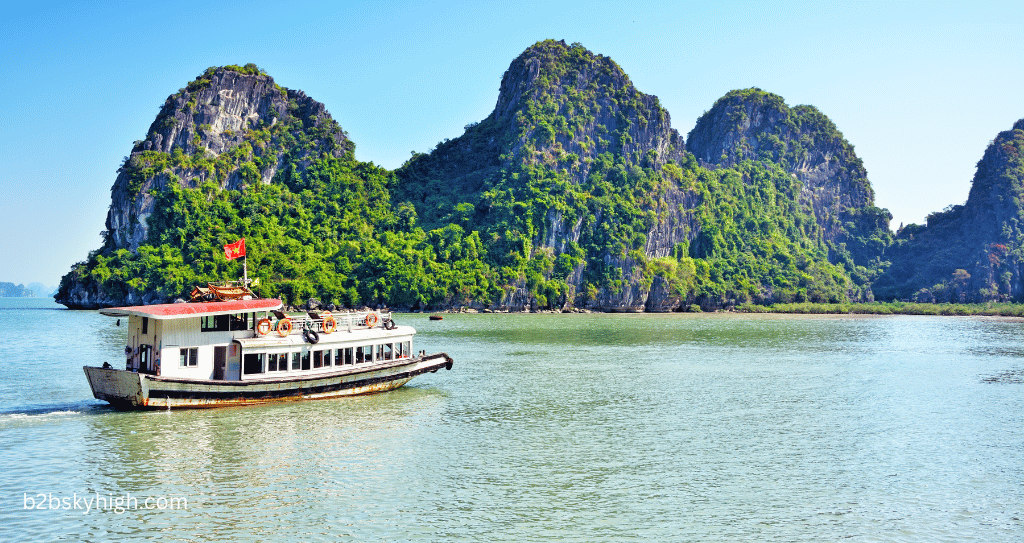
North Vietnam is built around Hanoi, with day movements to Halong Bay, Lan Ha Bay and Ninh Binh. Hanoi traffic is dense, and the old quarter restricts large vehicles at certain hours. Cruise embarkation at Halong is time-bound: a late arrival can mean a missed boarding slot and a disrupted first-day programme.
Central Vietnam runs along the coast from Da Nang to Hoi An and Hue. The roads are good, but distances between sights are real. Da Nang to Hue is roughly 100 km and takes two to three hours depending on the route and stops. Ba Na Hills has its own entry flow, parking and shuttle rules, so a driver who has never done a group drop there loses time.
South Vietnam is centred on Ho Chi Minh City. Distances are short on the map but slow on the ground. Cu Chi Tunnels and the Mekong Delta towns of My Tho and Ben Tre are both roughly 70 to 90 km out, and a single congested hour on the way back can push a group into the evening.
Across all three regions, four things decide whether a transfer feels premium or problematic:
- Vehicle reliability. Age, air-conditioning, seat condition and cleanliness matter more to Indian family groups than most agents expect, especially with senior travellers.
- Driver punctuality. Arrival-day pickups are the first impression of your brand. A driver who is not at the gate when the group exits customs creates anxiety immediately.
- Toll and fee handling. Expressway tolls, bridge fees and parking charges should be absorbed by the operator, not raised mid-journey.
- Capacity honesty. A vehicle that is “16-seater” on paper but cramped with luggage is a service failure, not a seating chart.
Agents who control these four variables through a reliable ground partner see fewer complaints, fewer refunds and more repeat bookings. That is the commercial argument for working with a direct operator that manages its own fleet rather than a reseller that subcontracts every leg.
Top Ground Operational Pain Points for Indian Travel Agents and How Sky High Tourism Solves Them
The same five problems come up in almost every conversation we have with Indian agents. Each one has a practical fix, and each fix should be written into the quote, not left to verbal assurance.
Pain Point 1: Unexpected Tolls and Hidden Charges
Vietnam’s expressway network has grown quickly, and tolls apply on routes that agents commonly sell, including the Hanoi to Halong expressway and approaches around Da Nang and Ba Na Hills. Some suppliers quote a low base rate and then add toll, parking and driver allowance as extras, which leaves the agent explaining a surprise charge to the client or absorbing it from margin.
Sky High solution: All-inclusive wholesale B2B net rates with no hidden toll or driver allowance surcharges. The quoted rate is the rate you pay. Where a route genuinely falls outside the standard inclusions (for example, an unscheduled extra stop), it is stated in the quote before confirmation.
Pain Point 2: Vehicle Size and Luggage Space Confusion
This is the most common cause of on-ground complaints from Indian groups. A 16-seater van does not carry 16 passengers with check-in suitcases. Indian travellers typically bring one large suitcase per person, plus cabin bags and shopping, and a 16-seater van realistically holds 8 to 10 passengers with large suitcases. Agents who sell by seat count rather than seat-plus-luggage count end up with overloaded vehicles or an emergency second car.
Sky High solution: Strict baggage-to-passenger allocation guidelines on every B2B quote. Each quote states the recommended passenger count for the vehicle category with large luggage, so you can size the booking correctly before the client travels. The matrix later in this guide gives working numbers for every category.
Pain Point 3: Direct Client Flipping and Driver Contact Sharing
Agents lose clients when a ground operator or driver shares a personal number, offers a private return trip or promotes a direct booking for the next visit. In a trade where margins are earned on relationships, this is a serious risk.
Sky High solution: A strict 100% white-label policy. Vehicles are unbranded, drivers operate under NDAs, and airport pickup signs display only the travel agent’s brand or logo. Guests meet your brand on arrival, and our name does not appear in front of your client.
Pain Point 4: Indian Vegetarian and Jain Food on Inter-City Drives
Long drives are where dietary needs become difficult. Vietnamese cuisine relies heavily on fish sauce, shrimp paste and shared cooking surfaces, and roadside stops rarely offer reliable vegetarian options, let alone Jain meals without onion and garlic.
Sky High solution: Pre-scheduled stops at certified Indian restaurants on key transit routes, including Hanoi to Halong, Da Nang to Hoi An, and Ho Chi Minh City to the Mekong Delta. Meals are pre-coordinated with the restaurant before the day of travel, so the group arrives to a prepared table and not a negotiation.
Pain Point 5: Foreign Currency Transfer Fees and Forex Losses
Paying a Vietnam supplier in USD or VND means bank remittance fees, intermediary charges and exchange-rate movement between quote and payment. For an agent working on a 20 to 30 percent margin, a few percentage points lost to forex can erase a meaningful share of profit.
Sky High solution: Local INR account transfers within India, with no foreign remittance surcharge on the agent’s side. You pay in rupees to an Indian account, which simplifies accounting, GST documentation and reconciliation.
B2B Fleet and Net Rate Comparison Matrix (2026)
The table below shows indicative 2026 B2B net rates by vehicle category, with suggested retail prices and the margin band an agent can earn. Net rates are the trade reference figures; INR values are approximate and move with the exchange rate.
How to read the table: The RRP column assumes a 25 percent markup over the net rate, which is a practical midpoint. Agents commonly price between 20 and 30 percent depending on season, client segment and package value. The margin column shows the earning range at 20 to 30 percent on the net rate.
7-Seater SUV / MPV (Toyota Fortuner, Innova, Kia Carnival)
| Service | B2B Net Rate (USD) | B2B Net Rate (INR approx.) | Suggested RRP (USD) | Agent Margin at 20–30% |
|---|---|---|---|---|
| Airport Transfer (HAN / DAD / SGN) | $30 – $45 | ₹2,500 – ₹3,700 | $38 – $56 | $6 – $14 |
| Full-Day Charter (10 hrs / 100 km) | $65 – $85 | ₹5,400 – ₹7,000 | $81 – $106 | $13 – $26 |
Capacity guide: 4 passengers with 4 large suitcases comfortably; up to 5 to 6 passengers with cabin-size bags only.
16-Seater Executive Van (Ford Transit, Hyundai Solati)
| Service | B2B Net Rate (USD) | B2B Net Rate (INR approx.) | Suggested RRP (USD) | Agent Margin at 20–30% |
|---|---|---|---|---|
| Airport Transfer | $40 – $55 | ₹3,300 – ₹4,500 | $50 – $69 | $8 – $17 |
| Full-Day Charter (10 hrs) | $85 – $115 | ₹7,000 – ₹9,500 | $106 – $144 | $17 – $35 |
| Hanoi to Halong Bay Express Highway, Return | $110 – $140 | ₹9,100 – ₹11,600 | $138 – $175 | $22 – $42 |
Capacity guide: 8 to 10 passengers with large suitcases; 12 to 14 with mostly cabin bags.
29-Seater Tourist Bus (Hyundai County, Isuzu Samco)
| Service | B2B Net Rate (USD) | B2B Net Rate (INR approx.) | Suggested RRP (USD) | Agent Margin at 20–30% |
|---|---|---|---|---|
| Airport Transfer | $65 – $85 | ₹5,400 – ₹7,000 | $81 – $106 | $13 – $26 |
| Full-Day Charter (10 hrs) | $130 – $175 | ₹10,700 – ₹14,500 | $163 – $219 | $26 – $53 |
Capacity guide: 18 to 22 passengers with large suitcases; up to 29 with cabin-size bags only.
45-Seater High-Deck Luxury Coach (Thaco Town, Hyundai Universe)
| Service | B2B Net Rate (USD) | B2B Net Rate (INR approx.) | Suggested RRP (USD) | Agent Margin at 20–30% |
|---|---|---|---|---|
| Airport Transfer | $95 – $130 | ₹7,800 – ₹10,700 | $119 – $163 | $19 – $39 |
| Full-Day Charter (10 hrs) | $190 – $250 | ₹15,700 – ₹20,600 | $238 – $313 | $38 – $75 |
Capacity guide: 32 to 38 passengers with large suitcases (the under-floor bay is the limiting factor); 45 with hand baggage only.
Passenger-plus-luggage figures are working guidelines. Exact capacity varies by vehicle model, suitcase size and whether the group carries extra shopping or golf and sports equipment. Always confirm against the specific quote.
Regional Ground Transportation Breakdown
North Vietnam Logistics
Noi Bai Airport (HAN) to Hanoi City. The airport sits roughly 30 km from the city centre, and the transfer typically takes 40 to 60 minutes depending on traffic. For late-night arrivals the road is quick; for morning and evening peaks, allow extra time. Meet-and-greet staff should be at arrivals with your brand’s sign, not at the kerb.
Hanoi to Halong Bay and Lan Ha Bay. The expressway has cut the journey to roughly 2.5 hours for most groups, covering about 150 km. This is the route where tolls and timing matter most. Cruise embarkation windows are usually late morning, which means a departure from Hanoi around 8:00 AM for most overnight cruises. Plan the Indian meal stop on the way, and brief the driver on the cruise port as Halong and Lan Ha operate from different departure points. The Hanoi to Halong return transfer on a 16-seater is the single most requested route in this region.
Hanoi to Ninh Binh (Trang An and Tam Coc). Roughly 95 to 100 km and two to two-and-a-half hours each way. Ninh Binh works as a full-day excursion or an overnight, and the boat rides at Trang An and Tam Coc run on fixed queues. Leaving Hanoi early reduces waiting time significantly in peak season.
Central Vietnam Logistics
Da Nang Airport (DAD) to hotels. Da Nang’s airport is close to the city and beaches, so airport transfers are short. Hoi An is roughly 30 km away and takes about 40 to 50 minutes.
Ba Na Hills and the Golden Bridge. Ba Na Hills is about 25 to 30 km from Da Nang city. Groups should plan for cable car queues, particularly between late morning and early afternoon. A dedicated shuttle arrangement on the day avoids parking delays and keeps the group together. Starting early, before the main tour-bus wave, is the simplest way to improve the client experience.
Hoi An Ancient Town. Vehicles cannot enter the old town centre at all hours, so the drop point matters. A driver who knows the permitted drop and pickup zones saves the group a long walk with luggage or shopping bags.
Da Nang to Hue Imperial City. Roughly 100 km with the scenic Hai Van Pass option or the faster tunnel route. The decision affects timing, so the quote should state which route is planned. A Hue day trip from Da Nang is possible, but an overnight in Hue is more comfortable for senior groups.
South Vietnam Logistics
Tan Son Nhat Airport (SGN) to the city. The airport is close to the central districts, roughly 7 to 8 km, but traffic can stretch a short transfer to 45 minutes or more at peak times.
Ho Chi Minh City sightseeing. The usual city programme covers the War Remnants Museum, Reunification Palace, Notre-Dame Cathedral, Central Post Office and Ben Thanh Market. A single vehicle held on a full-day charter works better than multiple point-to-point transfers, because parking and drop points shift constantly.
Cu Chi Tunnels. About 70 km from the city and typically 1.5 to 2 hours each way. Morning departures avoid the heat and the larger crowds.
Mekong Delta (My Tho and Ben Tre). My Tho is roughly 70 km and Ben Tre about 90 km from Ho Chi Minh City. Most Indian groups do this as a day excursion with a boat segment and local orchard visit. The road portion is where timing risks sit, so a realistic buffer should be built into the itinerary, and the Indian meal should be pre-arranged because options on the delta are limited.
Logistics and Regulatory Checklist for B2B Vietnam Quotes
Before confirming any Vietnam ground quote, run through these points.
Expressway Toll System (ETC)
Vietnam has moved its expressways to electronic toll collection, with vehicles carrying tags that are charged automatically as they pass. For an agent, the practical meaning is simple: tolls are real, they accrue per route, and the operator is responsible for the tag and balance. Ask every supplier to confirm in writing that tolls are inside the quoted rate. With Sky High Tourism, they are.
Driver Daily Duty Limits
Vietnamese transport regulations limit professional drivers’ hours, with a maximum of about 10 hours of driving per day and mandatory rest after extended continuous driving. This affects itinerary design. A programme that asks a single driver to cover a 150 km transfer, a full-day sightseeing circuit and a late return will either breach the limits or force a driver change. Build realistic duty hours into the plan, and treat the 10-hour full-day charter in the rate card as a hard ceiling rather than a soft target.
Vietnam E-Visa Approval Support
Indian passport holders are eligible to apply for the Vietnam e-visa online through the official government portal. Official processing is typically quoted at around three working days, but agents should advise clients to apply well ahead of travel and not to book non-refundable elements before approval. Check the current fee, validity and permitted entry points on the official portal at the time of booking, as these can change. Your ground partner should be able to guide the process and confirm entry requirements, but the application itself is made by the traveller or their agent.
VIP Express Airport Meet and Greet
Fast-track and meet-and-greet services at HAN, DAD and SGN reduce queue time at immigration for guests who pre-book. They are especially valuable for senior travellers, families with young children and corporate delegates arriving on a tight schedule. Confirm what is included: assistance through immigration, escort to the vehicle, or both.
Quote Checklist
- Vehicle type, model class and passenger-plus-luggage allocation stated
- Tolls, parking and driver allowance confirmed as included
- Duty hours and kilometre limits for charters defined
- Pickup sign branding (your logo) confirmed
- Indian Veg/Jain meal stops listed by route
- Waiting-time policy and late-night surcharge stated
- Payment currency, account and cancellation terms specified
Master MICE and Group Transportation Workflow
Corporate movements fail on coordination, not on vehicle quality. A 120-delegate conference may involve 3 arrival waves, 4 hotels, a cruise charter and a gala dinner, and each handover is a risk. This workflow keeps it manageable.
Step 1: Build the delegate manifest early. Collect flight numbers, arrival times, hotel allocation and luggage estimates at least two weeks ahead. Group delegates by arrival window and hotel, not by company department.
Step 2: Size the fleet from the manifest. Match passenger-plus-luggage capacity to each wave. A group of 40 with full luggage needs a 45-seater coach plus a support vehicle, or two 29-seaters, rather than a single coach filled to its seat count.
Step 3: Assign a ground coordinator per hub. One coordinator at each airport, with a printed manifest and your brand’s signage, keeps arrivals orderly. Staggered arrivals are managed in real time through a dispatcher.
Step 4: Plan multi-hotel drop-offs by route sequence. When one coach serves several hotels, sequence the stops geographically and brief delegates on the order before boarding. Add 10 to 15 minutes per hotel for luggage handling.
Step 5: Run conference shuttles on a fixed loop. For venue-to-hotel shuttles, publish a timetable with departure intervals, and keep one standby vehicle in reserve for the opening and closing sessions.
Step 6: Treat cruise port charters as time-critical. Halong and Lan Ha embarkation has fixed windows. Add a buffer to the departure from Hanoi, and plan a backup vehicle on the Hanoi to Halong run for large groups.
Step 7: Keep a live dispatch channel. A single WhatsApp group between your trip lead, our dispatcher and the on-ground coordinators solves most issues in minutes and not hours.
Step 8: Reconcile and invoice cleanly. One consolidated INR invoice, with a transfer-by-transfer breakdown, simplifies client billing and audit trails.
High-Margin Upsell Opportunities for Travel Agents
Transport is the foundation, and add-ons are where an agent can lift the average booking value without selling a new trip. These are the upsells that tend to convert for Indian clients.
- Luxury Halong Bay day and overnight cruises. The upgrade from a standard to a premium or luxury cruise is the largest single revenue lever in a North Vietnam package. Present two options at quote stage rather than one.
- Ba Na Hills VIP cable car passes. Priority access reduces queue time at one of Central Vietnam’s busiest attractions, and families with children and seniors respond well to it.
- Seaplane transfers from Hanoi to Halong. A scenic flight replaces the road transfer for clients who want a premium experience. It is a strong add-on for honeymooners and special-occasion travellers, subject to availability and weather.
- Speedboat charters to Cham Island. A half-day or full-day private boat from the Hoi An area adds a snorkelling or beach segment for active groups.
- Luxury spa add-ons. Vietnamese spa packages are good value and easy to attach to rest days, particularly for couples and ladies’ groups.
- Private guided city experiences. Street-food walks (with vegetarian arrangements), cyclo rides and evening cultural shows lift per-person revenue with minimal operational load.
Price these as optional line items on the quote, with clear selling prices, so the client can add them without reopening the whole package.
Why Partner with Sky High Tourism as Your Preferred Vietnam DMC in India
Many agents already work with several ground suppliers and want one dependable partner for Vietnam. Here is what Sky High Tourism offers the Indian trade.
Direct fleet management. Our vehicle range covers 7-seater Fortuner and Innova, 16-seater Ford Transit and Hyundai Solati, 29-seater County and 45-seater luxury coaches. Managing the fleet directly means we control vehicle condition, driver assignment and availability, and there is no chain of subcontractors between your booking and the vehicle at the gate.
Fast B2B quote turnaround. Registered agents receive transport quotes in under 10 minutes during working hours, which matters when a client is comparing options across several agencies.
24/7 dispatcher support in India and Vietnam. Our dispatchers operate around the clock in both countries, so a flight delay at 2:00 AM is handled by a person who knows the booking.
English and Hindi-speaking guide network. Guides who can communicate comfortably with Indian groups remove a common friction point, especially with senior travellers and first-time international visitors.
Airport arrival assistance at HAN, DAD and SGN. Round-the-clock airport support, with your brand on the pickup sign.
Indian Veg and Jain meal coordination. Pre-arranged stops on the main transit routes, as outlined above.
Direct INR bank transfer. Pay through a local account in India, with no foreign remittance surcharge.
100% white-label execution. Your brand, your client, your relationship.
You can review the full service range and register for rate access on our Vietnam page: https://b2bskyhigh.com/vietnam.
Frequently Asked Questions (FAQs for Travel Agents)
1. How much should clients tip drivers and guides in Vietnam?
Tipping is appreciated but not mandatory in Vietnam. A common trade guideline is a small daily amount per vehicle for the driver and a slightly higher amount for the guide, given at the end of service. Brief your clients on this before departure so it does not become an awkward moment at the end of the trip, and note that the amount should reflect group size and service quality.
2. How much luggage fits in a 16-seater van?
A 16-seater van realistically carries 8 to 10 passengers with full-size suitcases. With mostly cabin bags, 12 to 14 passengers is possible. For groups larger than 10 with check-in luggage, book a 29-seater or add a support vehicle.
3. How long does Vietnam e-visa processing take for Indian travellers?
Official processing is typically around three working days, but timing can vary. Advise clients to apply at least a week before departure and to use the official government portal. Do not rely on last-minute approval for travel dates, and confirm current fees and validity at the time of application.
4. Is there a surcharge for midnight or very early transfers?
Transfers during late-night and very early morning hours may carry a surcharge, depending on the operator and route. This should be stated in the quote before confirmation. Share flight details early so dispatch can plan the driver’s duty hours, and confirm the exact surcharge with us when you request your quote.
5. Are child seats available?
Child seats can be arranged on request, subject to advance notice and vehicle type. Specify the child’s age and weight at booking so the correct seat is allocated, and confirm availability for the vehicle category you have selected.
6. Can Jain meals be arranged on inter-city drives?
Yes. We pre-coordinate Indian vegetarian and Jain meal stops on key routes, including Hanoi to Halong, Da Nang to Hoi An and Ho Chi Minh City to the Mekong Delta. Share dietary requirements, group size and any allergies at booking so the restaurant can prepare in advance.
7. Will the driver or vehicle carry Sky High Tourism branding?
No. Vehicles are unbranded, drivers operate under NDAs, and airport pickup signs show only your agency’s brand or logo. Our operation is fully white-label.
8. What happens if a flight is delayed?
Our dispatchers monitor flight status for booked arrivals, and the driver adjusts the pickup time accordingly. Waiting-time terms are stated in the quote, and our 24/7 team coordinates changes with your trip lead.
Conclusion
Vietnam is one of the most saleable destinations in the Indian outbound market, and its popularity is exactly why ground quality separates agencies. Clients forgive a rainy day. They do not forgive a missed pickup, a cramped van or a bill with surprise charges. The agents who grow on repeat business are those who choose a ground partner on operational discipline: all-inclusive net rates, honest capacity guidance, strict white-label execution, practical Indian meal planning and simple INR settlement.
If you want to see how that looks in practice, register with Sky High Tourism at https://b2bskyhigh.com/vietnam to access instant wholesale transport tariff cards for your next Vietnam booking.
Important B2B Tariff & Operational Disclaimer:
All wholesale B2B net vehicle rates, transfer packages, and hourly charter estimates listed in this guide are indicative figures provided strictly for registered travel agents, tour operators, and MICE organizers. Final transport tariffs vary based on seasonal peak surcharges, driver duty schedules, expressway tolls, and fuel adjustments. Please connect with the Sky High Tourism Vietnam operations desk at b2bskyhigh.com/vietnam to receive live, validated net tariffs for your upcoming group or FIT bookings.