Introduction
Every travel agency in Delhi selling Ladakh eventually hits the same wall: a DMC that quotes well on WhatsApp but disappears the moment a client’s flight gets rescheduled, a taxi union goes on strike, or a permit gets rejected at the last checkpoint. Ladakh is not a destination you can sell on rate cards alone — it runs on real-time ground coordination, and that coordination breaks down when your operator is three time zones removed from your sales desk and eight states away from your clients.
This is why Delhi-based travel agencies increasingly prefer a Ladakh B2B DMC Delhi partner — one with a physical or strongly connected Delhi office, and simultaneously robust ground handling in Leh. The advantage isn’t cosmetic. It means your reservations team can walk into a contracting meeting instead of chasing a Ladakh-based agent across patchy Leh internet. It means your urgent client escalations get answered during IST business hours by someone who understands the Delhi market’s pricing sensitivity. This guide breaks down exactly what a strong Ladakh Tour Operator Delhi partnership should offer, how B2B pricing should be structured, and what safety and compliance protocols your agency needs to know before selling a single seat.
Section 1: The Advantage of Partnering with a Delhi-Based Ladakh DMC
Face-to-Face Contracting Changes Everything
When you’re negotiating annual rate cards, block seat allocations, or fixed departure slots, nothing replaces sitting across a table. A Ladakh DMC for Travel Agents Delhi with an operational or liaison office in Delhi NCR (Karol Bagh, Connaught Place, Paharganj, and Nehru Place remain the traditional B2B travel trade clusters) allows your agency to:
- Verify the DMC’s credentials, vehicle fleet documentation, and hotel tie-ups in person rather than relying on forwarded screenshots.
- Negotiate net rates and commission structures directly, without translation loss through multiple intermediaries.
- Build the kind of trust-based relationship that gets your client bumped to a better hotel category when things go wrong on the ground.
- Settle disputes and payment reconciliations locally, under Delhi jurisdiction, rather than navigating cross-state legal complications.
Shared time zones sound like a minor point until you’re trying to resolve a client’s missed connecting flight at 11 PM and your DMC contact in a remote corner of Ladakh has no network coverage. A Delhi-based coordination desk typically operates extended hours aligned with how Delhi agencies actually work — early starts for outbound client calls, late evenings for emergency handling.
Seamless Coordination Between Delhi Sales Desks and Leh Ground Operators
The real strength of a good Ladakh B2B DMC Delhi setup is the bridge it builds between two operational realities:
- Flight monitoring: Delhi-Leh flights are frequently affected by weather holds, especially in shoulder seasons (April, October). A Delhi desk that tracks IndiGo, Air India, Vistara, and SpiceJet schedules in real time can rebook stranded clients faster than a Leh-only operations team working from a single local office.
- Volvo and overland fleet coordination: For agents selling the Manali-Leh or Srinagar-Leh overland circuits, Delhi-based DMCs typically maintain direct contracts with Volvo/multi-axle operators originating from Delhi’s ISBT hubs, plus a parallel fleet of Innovas, Tempo Travellers, and Boleros stationed in Leh for the mountain sectors. This dual fleet management means no gap in transport continuity when clients transition from highway travel to high-altitude terrain.
- Document and permit relay: Inner Line Permits, medical certificates, and identity documentation collected at the Delhi sales stage need to reach the Leh ground team well before arrival. A single-entity DMC with offices in both cities removes the courier and email lag that causes permit rejections at checkpoints like Karu or Sasoma.
Section 2: Core B2B Offerings for Delhi Travel Agents
A serious Ladakh Tour Operator Delhi partner should offer a full-spectrum product range, not just one or two fixed itineraries. Here’s what your agency should expect on the table.
1. Fixed Departure Group Packages from Delhi
Fixed departures are the backbone of volume-driven B2B sales, especially for agents targeting corporate incentive groups, college trips, and budget-conscious FIT clusters that don’t want the cost of a private vehicle. A well-run DMC should offer:
- Weekly or bi-weekly guaranteed departures from Delhi during peak season (June to September).
- Minimum group guarantee clauses so your agency isn’t left holding unsold seats.
- Standardized inclusions (fixed hotel category, fixed vehicle type, fixed meal plan) that make it easy for your counter staff to quote instantly without back-and-forth confirmation.
- Early-bird net rate slabs that reward agencies booking allotments 60–90 days in advance.
2. Tailor-Made Itineraries: FIT, Luxury, and Bike Expeditions
Not every client wants a group bus. Your DMC partner should be equally strong on:
- FIT (Free Independent Traveller) packages — private cab-based circuits customized around family requirements, honeymoon add-ons, or photography-focused routing.
- Luxury Ladakh — premium boutique stays (Leh Palace-view properties, Nubra luxury camps, Pangong glamping setups), private SUVs, and dedicated English/Hindi-speaking guides for high-net-worth clients your agency is targeting through wedding and MICE verticals.
- Motorcycle expeditions — Royal Enfield rental tie-ups, mechanic backup vehicles, and rider insurance coordination for the Delhi biking community that treats Leh-Manali-Leh as a rite of passage. This segment carries higher margins but demands a DMC with genuine mechanical and safety infrastructure, not just a bike rental contact.
3. Inner Line Permit (ILP) Handling and Local Taxi Union Compliance
This is where inexperienced operators fail Delhi agents most often. A competent Ladakh DMC for Travel Agents Delhi must handle:
- Online ILP applications for restricted zones (Nubra, Pangong, Tso Moriri, Dah-Hanu) submitted with correct client documentation well ahead of arrival.
- Awareness of which nationalities require Protected Area Permits (PAP) versus the standard ILP for domestic travelers, since group manifests with foreign nationals need separate paperwork.
- Registered membership and good standing with the Leh Taxi Union, since unregistered vehicles are frequently blocked from operating in and around Leh town and on restricted routes — a detail that has stranded uninformed Delhi agencies mid-season.

Section 3: Detailed B2B Itinerary Breakdown
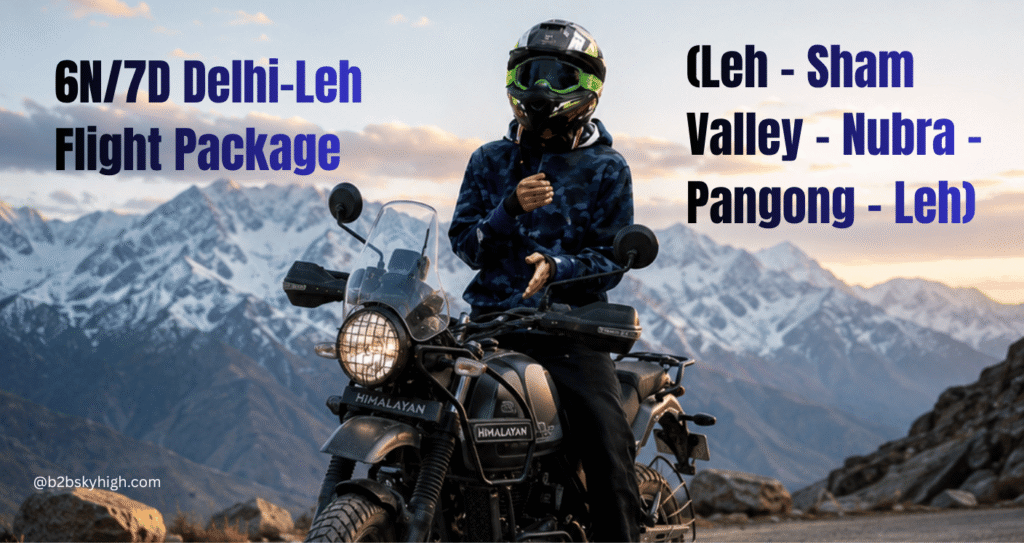
Package A: 6N/7D Delhi–Leh Flight Package (Leh – Sham Valley – Nubra – Pangong – Leh)
Day 1 — Delhi to Leh (Flight) | Arrival & Rest Client arrives on morning flights; ground team receives at Kushok Bakula Rimpochee Airport. Complete rest day is mandatory — no sightseeing, hydration and light meals only, oxygen cylinder kept on standby at the hotel.
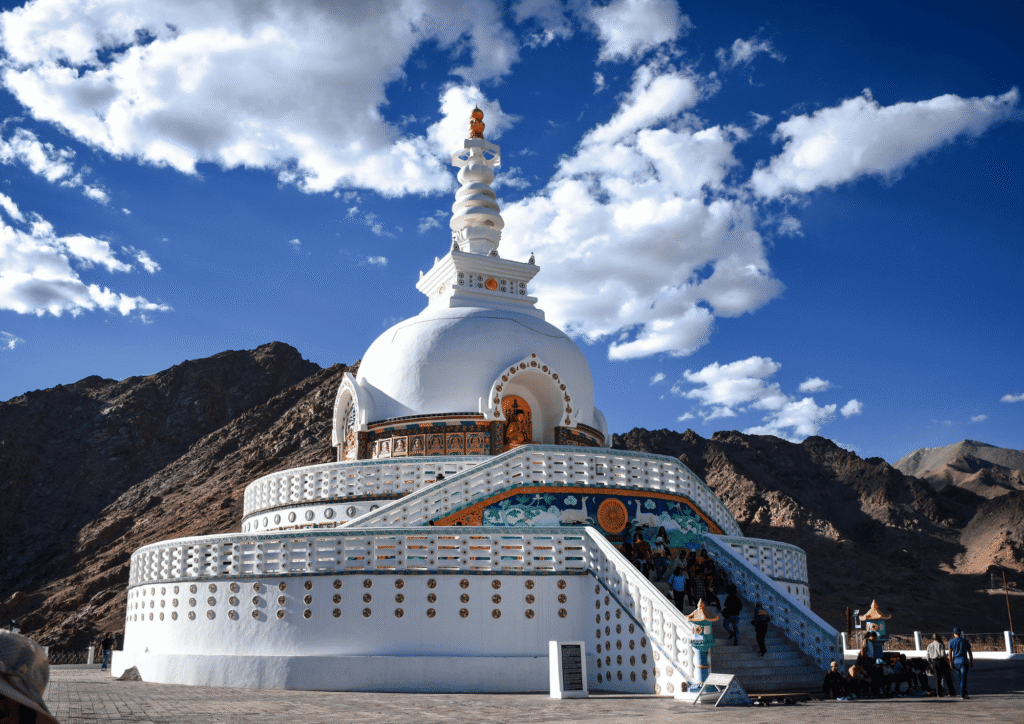
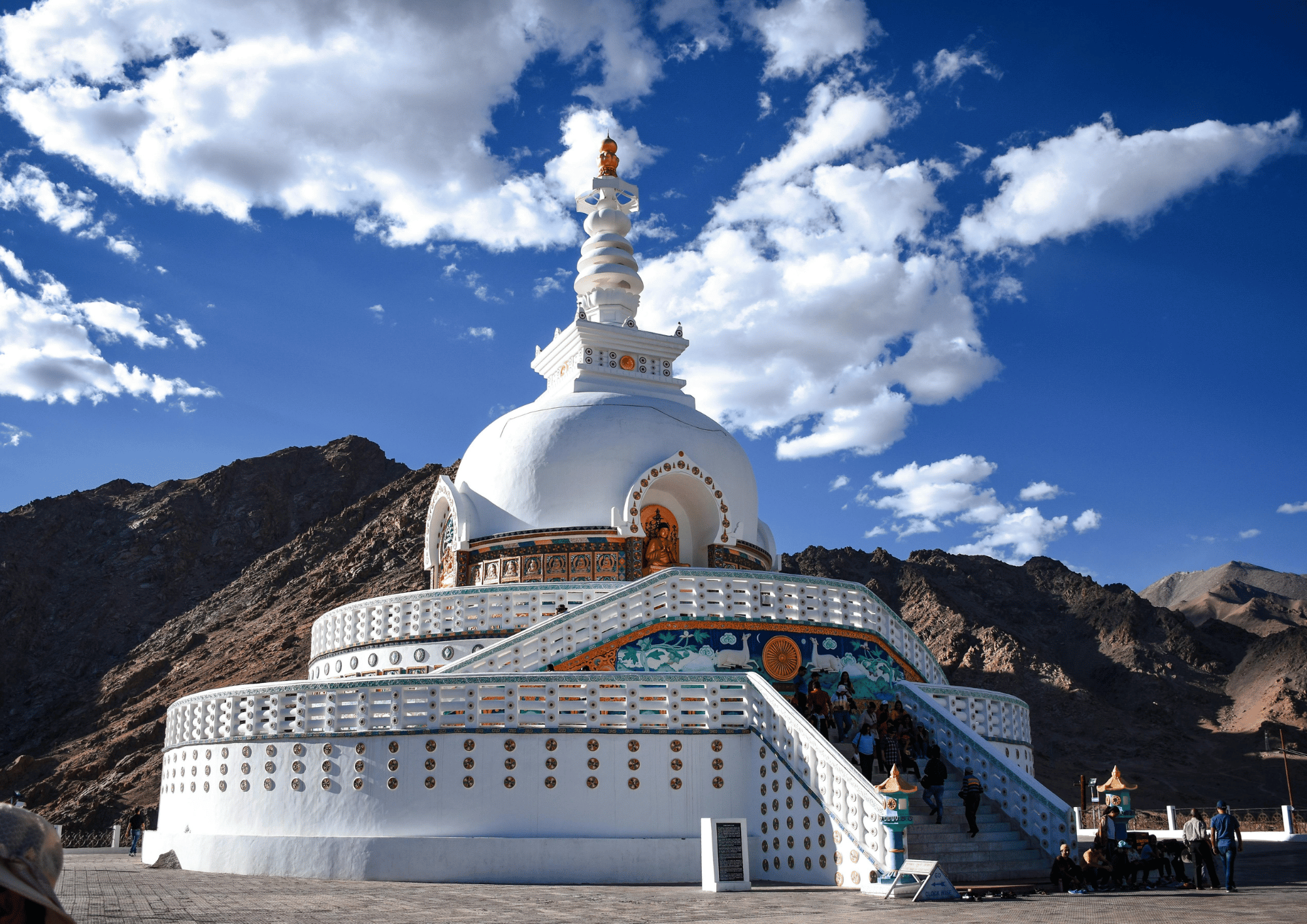
Day 2 — Leh Local Acclimatization Short, low-exertion outings only: Shanti Stupa, Leh Market, Leh Palace viewpoint. No altitude gain beyond Leh town (3,500m).
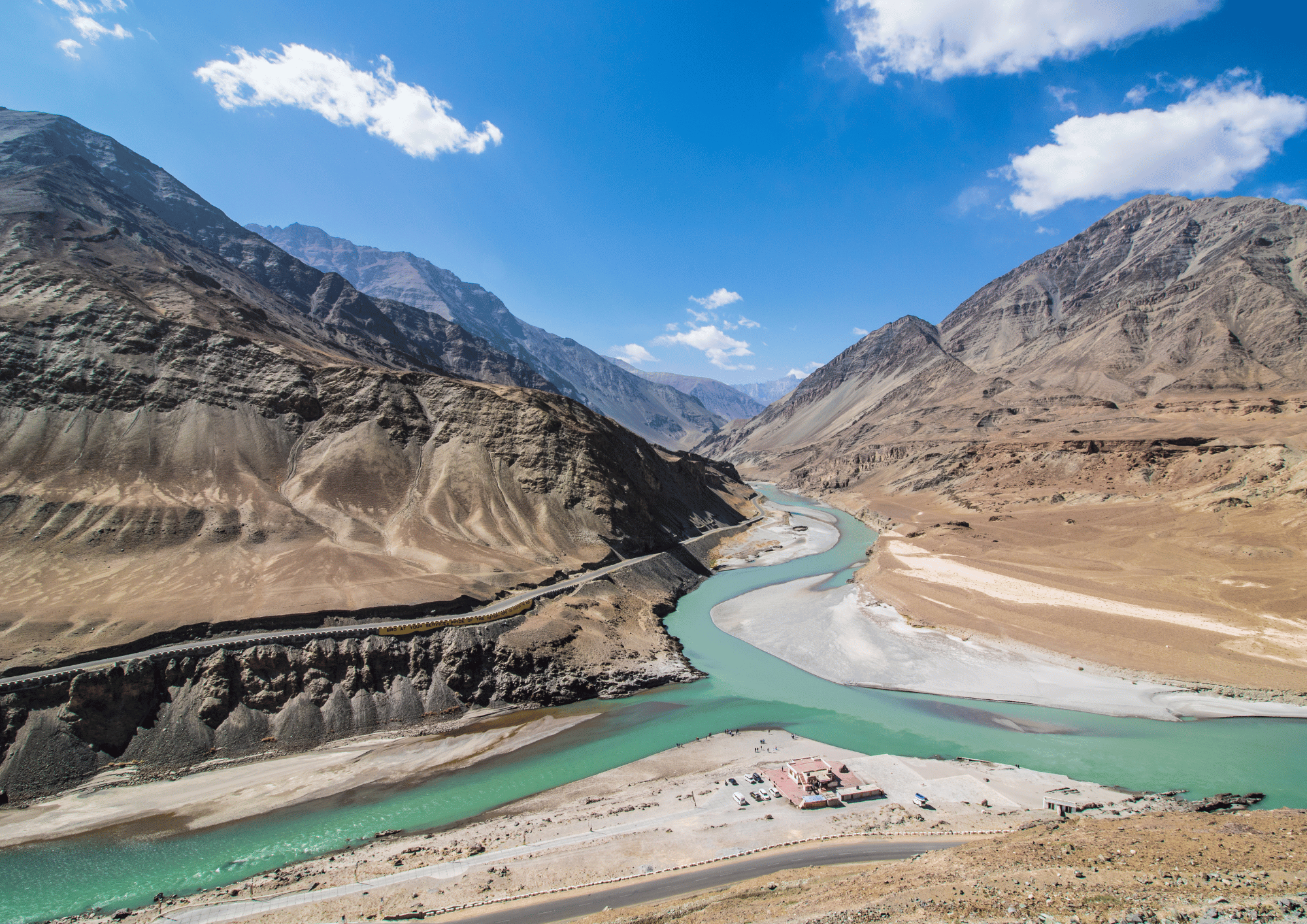
Day 3 — Sham Valley Excursion Magnetic Hill, Gurudwara Pathar Sahib, Sangam (confluence of Indus and Zanskar rivers), Alchi Monastery. Full-day low-altitude circuit to continue acclimatization before higher passes.
Day 4 — Leh to Nubra Valley via Khardung La Crossing one of the world’s highest motorable passes en route to Nubra. Overnight at Hunder or Diskit — double-humped Bactrian camel safari on the sand dunes, riverside camping option for premium packages.
Day 5 — Nubra to Pangong Lake via Shyok Route Operationally, this is the most sensitive day — road conditions along the Shyok route vary seasonally and vehicles need to be briefed on alternate routing via Wari La if needed. Overnight at Pangong in fixed camps (permits and camp allotments must be pre-confirmed, as lakeside camping capacity is limited in peak season).
Day 6 — Pangong to Leh via Chang La Return to Leh through Chang La pass. Evening free for shopping and departure preparation.
Day 7 — Departure from Leh Airport transfer for return flight to Delhi.
Operational notes for agents: This itinerary requires a minimum two-night altitude buffer before Khardung La crossing — DMCs offering to compress this into 5N/6D should be treated as a red flag for client safety compliance.
Ladakh Bike Adventure
3* Hotel • Activities • Transport (Minimum 2 Pax)
USD 1XX
PP on Double Sharing
Leh Ladakh Bike Trip
3* Hotel • Activities • Transport (Minimum 2 Pax)
USD 1XX
PP on Double Sharing

Ladakh Himalayan Escape
3* Hotel • Activities • Transport (Minimum 2 Pax)
USD 2XX
PP on Double Sharing
Leh Ladakh Explorer
3* Hotel • Activities • Transport (Minimum 2 Pax)
USD 2XX
PP on Double Sharing
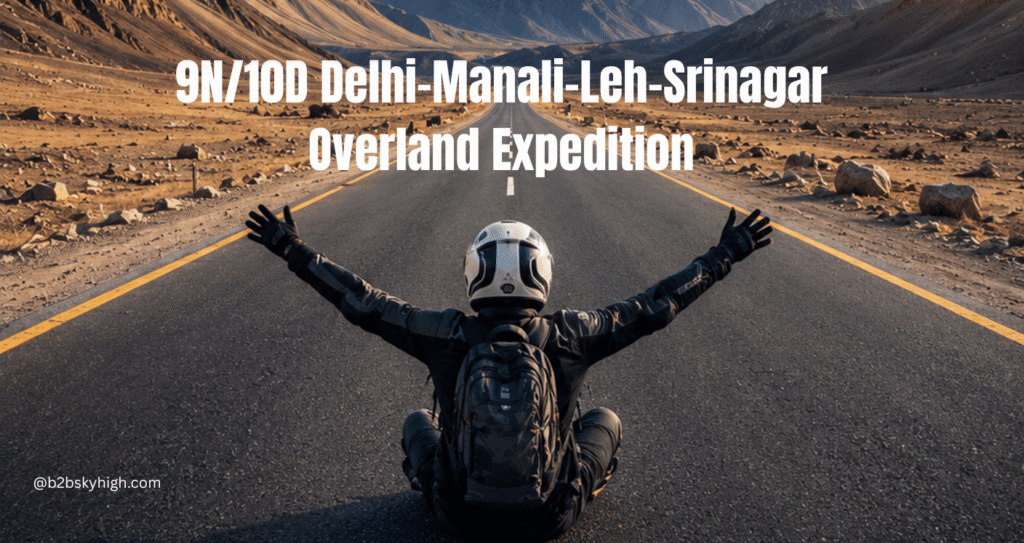
Package B: 9N/10D Delhi–Manali–Leh–Srinagar Overland Expedition
Day 1 — Delhi to Manali (Volvo/Overnight Coach) Departure from Delhi ISBT in the evening; overnight coach journey.
Day 2 — Manali Arrival & Local Sightseeing Check-in, rest, optional local sightseeing (Hadimba Temple, Old Manali). Vehicle switch briefing for the next day’s mountain sector.
Day 3 — Manali to Jispa/Keylong Crossing Rohtang/Atal Tunnel, Baralacha La approach begins. First high-altitude night halt.
Day 4 — Jispa to Sarchu High-altitude transit day; overnight in fixed tented camps at Sarchu (altitude approximately 4,290m) — mandatory oxygen support kept in support vehicle.
Day 5 — Sarchu to Leh via Tanglang La Crossing Tanglang La, one of the highest passes on this route, before descending into Leh valley.
Day 6 — Leh Rest & Acclimatization Buffer day for clients arriving fatigued from the overland sector; light local sightseeing only.
Day 7 — Nubra Valley Excursion Day trip or overnight via Khardung La as per package inclusion.
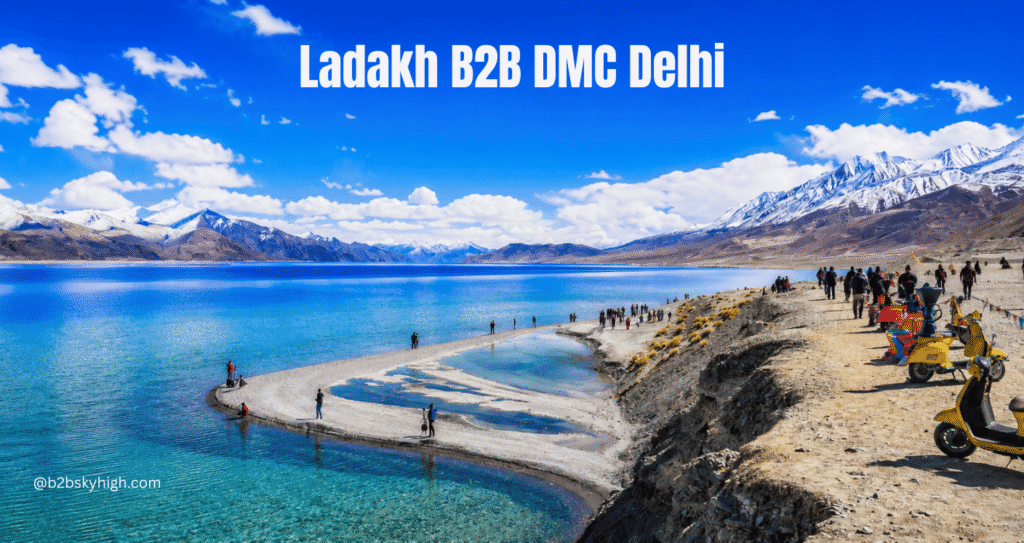
Day 8 — Pangong Lake Excursion Day trip to Pangong and return, or overnight stay depending on itinerary tier.
Day 9 — Leh to Srinagar via Kargil (Overland) Long transit day through Kargil, Dras (War Memorial stop), and Sonamarg approach, concluding in Srinagar.
Day 10 — Srinagar Departure or Extension Optional Dal Lake houseboat stay extension before flight departure from Srinagar to Delhi.
Operational notes for agents: This circuit demands two separate vehicle contracts (Manali-side and Leh-side fleets) plus a Kashmir-sector vehicle for the final overland leg — a DMC without established Srinagar-side contacts will typically outsource this leg, adding cost and reducing your agency’s control over service quality.
Section 4: Comprehensive Cost & Pricing Matrix for B2B Agents
Rates below are illustrative B2B net rate ranges per person (twin-sharing basis) for the 6N/7D Delhi-Leh flight package, structured for Delhi agents to build retail markups on. Actual contracted rates vary by season, group size, and hotel tie-ups — always confirm current rate cards directly with your DMC partner.
| Package Tier | Approx. B2B Net Rate (per person) | Hotel Category | Vehicle Type | Typical Retail Markup | Agent Margin (approx.) |
|---|---|---|---|---|---|
| Budget | ₹18,000 – ₹22,000 | 2-star / guesthouses | Shared Innova/Tempo Traveller | 15–20% | ₹2,700 – ₹4,400 |
| Standard | ₹26,000 – ₹32,000 | 3-star hotels | Private Innova/Xylo | 18–22% | ₹4,700 – ₹7,000 |
| Deluxe/Luxury | ₹42,000 – ₹58,000 | 4-star & boutique luxury camps | Private SUV (Fortuner/Innova Crysta) | 20–25% | ₹8,400 – ₹14,500 |
Notes for Delhi agents on pricing strategy:
- Flight costs (Delhi-Leh return) are typically quoted separately from land packages since airfare fluctuates independently and daily — bundling it into a fixed package rate exposes your agency to margin erosion if fares spike.
- Peak season (June–August) rates run 20–30% higher than shoulder season (May, September); DMCs should provide season-wise rate cards at the start of the calendar year, not on a query-by-query basis.
- Group departures (8+ pax) typically unlock an additional 8–12% net rate reduction compared to FIT quotes — worth negotiating into your annual contract if your agency handles volume.
- Always request child rates, single supplement charges, and extra-bed rates as separate line items in the rate card — vague “customized on request” pricing here is a common source of margin disputes later.
Section 5: Safety, Emergency Protocols & Local Union Rules
Ladakh’s high-altitude environment makes safety infrastructure a non-negotiable part of due diligence when your agency is choosing a Ladakh B2B DMC Delhi partner. Ask these questions before signing any contract.
Oxygen Cylinder Support in Transport Vehicles
Every vehicle operating on high passes (Khardung La, Chang La, Tanglang La) and in camps at altitudes above 4,000m should carry a stocked oxygen cylinder, and drivers should be trained in basic recognition of Acute Mountain Sickness (AMS) symptoms. Confirm whether this is standard across the DMC’s entire fleet or only offered as a paid add-on — this distinction matters for your liability exposure as the selling agent.
Mandatory 48-Hour Acclimatization Rules
For clients flying directly from Delhi (near sea level) into Leh (3,500m), a minimum 48-hour acclimatization period with restricted physical activity is considered essential medical practice, and is enforced by many hotels and the local administration for high-altitude excursions. Your agency should build this buffer into every flight-based itinerary as a default, not an optional extra — DMCs offering same-day Nubra or Pangong excursions immediately after arrival should be avoided regardless of how attractive the discounted rate looks.
Leh Taxi Union vs. Delhi-Registered Vehicles
This is a recurring compliance issue for Delhi agencies unfamiliar with Ladakh’s local transport regulations:
- Local sightseeing within Leh district and Ladakh’s restricted zones (Nubra, Pangong, Sham Valley, Tso Moriri) must generally be operated through vehicles registered with and dispatched by the Leh Taxi Union, which controls local tourist vehicle operations under a fixed rate and rotation system.
- Delhi-registered vehicles used for the Manali-Leh or Srinagar-Leh overland legs are permitted for inter-state transit but typically cannot be used for local sightseeing once inside Ladakh’s Union Territory jurisdiction — clients often need a vehicle swap in Leh even if they arrived overland in a Delhi-plated vehicle.
- Attempting to bypass this with non-union vehicles has historically resulted in vehicles being turned back at checkpoints, leaving clients stranded — a risk no Delhi agency should accept for the sake of a marginally cheaper quote.
A reliable DMC partner will have this fleet-swap logistics built into their standard operating procedure and will explain it upfront during contracting, not leave your agency to discover it mid-tour through an angry client call.
FAQ Section for B2B Travel Agents
Why should Delhi agents choose a DMC with a local office in Delhi?
A Delhi office allows in-person contracting, faster dispute resolution under shared jurisdiction, real-time coordination during flight disruptions, and same-timezone escalation handling for urgent client issues — all of which are harder to manage when your only point of contact is based remotely in Leh with limited connectivity.
What are the average B2B margins for travel agents selling Ladakh packages?
Depending on package tier, Delhi travel agents typically build in retail markups of 15–25% over DMC net rates, translating to approximate per-person margins of ₹2,700–₹4,400 on budget packages and ₹8,400–₹14,500 on deluxe/luxury packages. Margins tend to be higher on customized FIT, luxury, and bike expedition products compared to standardized fixed departures, since these carry less price transparency and more service differentiation.
How are payments and cancellation policies handled between Delhi agents and Ladakh DMCs?
Most established DMCs require a booking advance (commonly 25–50% at confirmation) with the balance due 15–30 days before travel, though terms vary by DMC and season. Cancellation policies are typically tiered — reduced penalties for cancellations 30+ days out, increasing closer to the travel date, with hotel and camp bookings often carrying stricter non-refundable clauses during peak season due to high demand. Delhi agents should insist on a written contract specifying exact cancellation slabs, refund timelines, and force majeure clauses (weather-related road closures are common in Ladakh) before committing to any allotment.
Ready to Set Up Your Ladakh B2B Partnership?
If your agency is looking to lock in 2026 season rate cards, negotiate fixed departure allotments, or get a customized quote for an upcoming FIT, luxury, or bike expedition group — the time to start contracting is now, well before the peak June-September rush fills allotments and hotel blocks. Reach out for our current B2B rate card, fleet and hotel contracting details, and a direct conversation with our Delhi coordination desk about how we can support your agency’s Ladakh sales this season.
Connect with us today for rate cards, contracting terms, and tailor-made itinerary support.