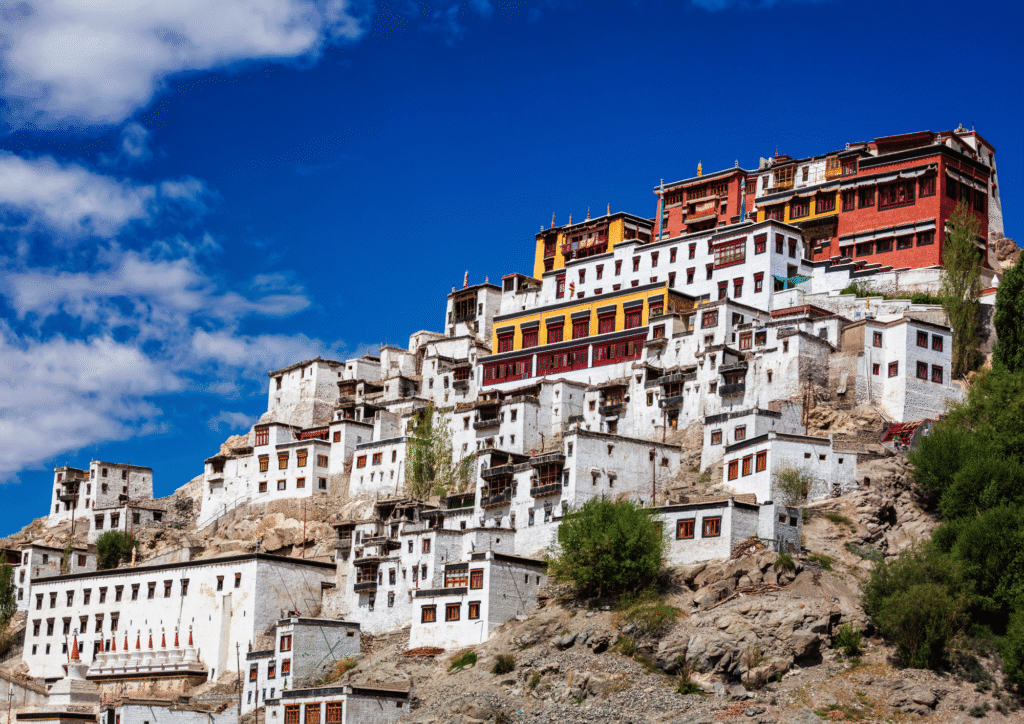
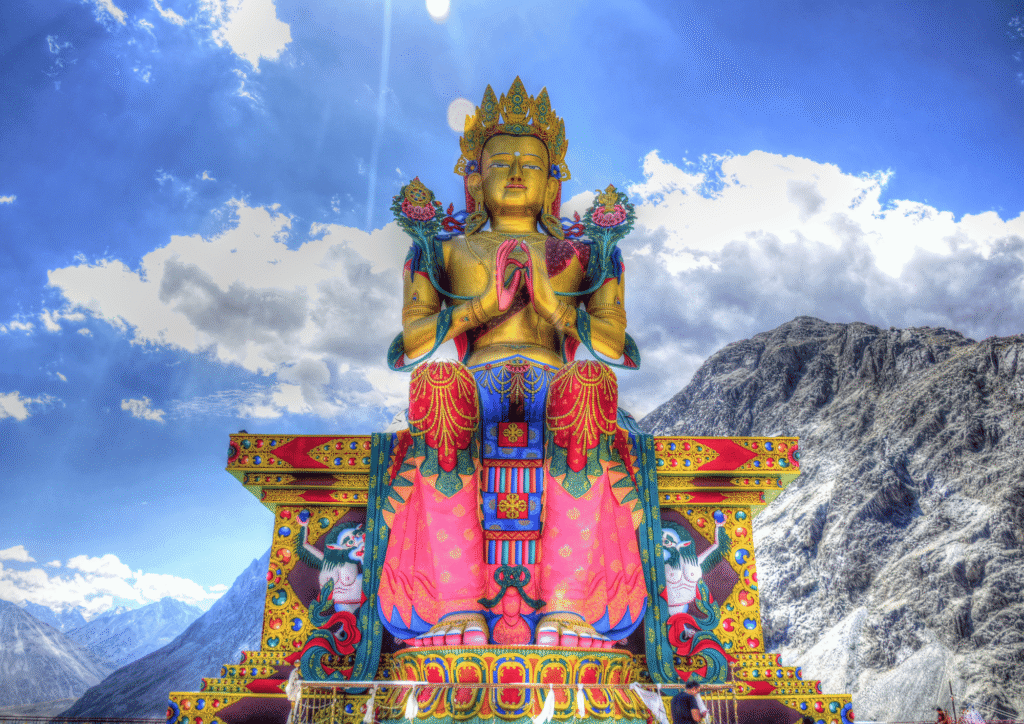
A Ladakh itinerary rarely fails on the hotel or the sightseeing list. It fails on the road: a vehicle that was not allowed to pick up in Leh, an oxygen-starved guest at Khardung La with no cylinder in the car, a permit that was not ready at the Diskit checkpost, a tempo that broke down on the Shyok route with no replacement within three hours. Every one of these lands on the agent who sold the trip, not on the supplier.
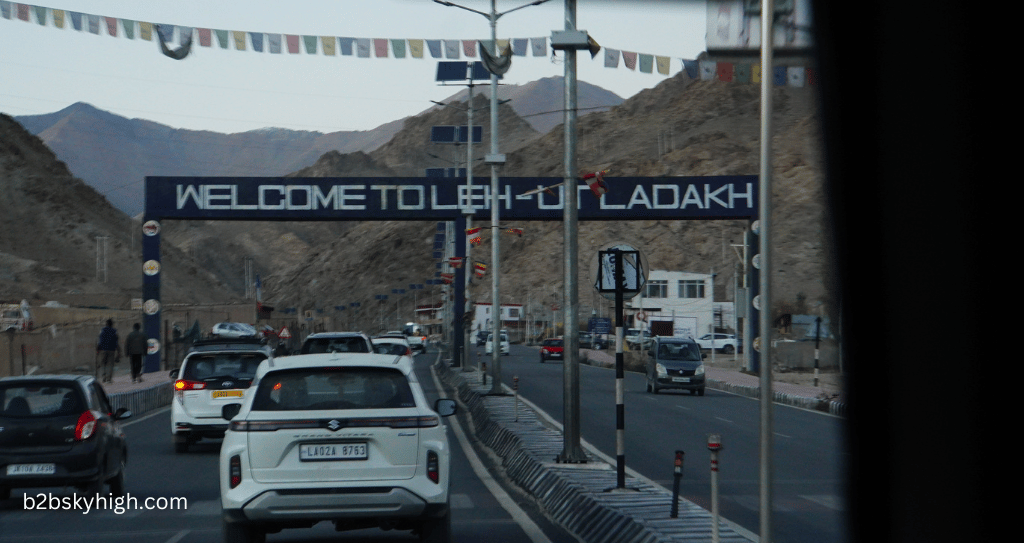
This guide is written for travel agents, outbound tour operators, bike-trip organisers and MICE planners who sell Ladakh and want a ground partner that controls the one thing that matters most in the region: the vehicle and the driver. It explains how Ladakh ground logistics actually work, where agents lose money and reputation, what wholesale net rates look like for 2026, and how a direct-fleet Ladakh B2B transport DMC such as Sky High Tourism is structured to remove those risks.
1. Why Ladakh Ground Logistics Require a Specialised B2B Transport DMC
Most Indian destinations can be handled by any competent DMC with a list of cab vendors. Ladakh cannot. Four factors make ground transport here a specialist discipline.
Terrain and altitude
Leh sits at roughly 3,500 metres. The routes agents sell most often cross passes well above 5,000 metres: Khardung La on the way to Nubra, Chang La on the way to Pangong Tso, and Umling La on the Hanle side. Oxygen is thin, engines lose power, brakes and clutches work harder on long descents, and a vehicle that is merely “fine” at sea level can become a liability in a day. A transport partner needs to know which vehicles, which drivers and which maintenance cycles are suitable for these roads.
Leh Taxi Union rules
Local taxi operation in Ladakh is governed by the Leh taxi union system. In practice, non-local vehicles are not permitted to operate local sightseeing inside Leh and its surrounding circuits. A taxi from Delhi, Manali, Srinagar or Chandigarh can bring guests into Ladakh, but using it for inner sightseeing, Nubra or Pangong runs into union restrictions. Agents who ignore this risk confrontations at tourist points, vehicles being stopped, and guests stranded in the middle of an itinerary. For a trade seller, the rule is simple: the vehicle moving your guests inside Ladakh should be a union-registered local vehicle.
Weather and pass unpredictability
Passes close for snow, landslides and road repair, sometimes for a few hours and sometimes for a day. Shyok river crossings can swell by afternoon. Nubra can be clear while Chang La is shut. A transport partner has to monitor conditions daily and have a plan B ready, such as reversing a circuit, adjusting the departure time or re-routing, before the guest ever notices.
Mechanical health
Ladakh punishes poor maintenance. Tyres, brake pads, suspension, cooling systems and fuel quality all matter more here than on plains routes. There are very few places between Leh and the remote circuits where a replacement vehicle can be found at short notice, which is why standby fleet positioning is a core part of the service rather than an add-on.
For these reasons, “best Ladakh transport DMC B2B” is not a marketing phrase. It describes a supplier that owns or directly coordinates the fleet, knows the union framework, and has a mountain-specific safety and backup system.
2. Top Ground Operational Pain Points for Travel Agents, and How Sky High Tourism Solves Them
Pain Point 1: Leh Taxi Union restrictions and non-local vehicle bans
The problem. Agents who book through a Delhi or Manali vendor often discover the vehicle cannot legally do local sightseeing in Leh. The result is impoundment threats, awkward roadside disputes and guests who feel the trip is unsafe.
Sky High solution. Sky High works through a direct partnership with local, Union-registered vehicles and drivers. Innova Crysta, Mahindra Scorpio and Xylo SUVs and 12, 16 and 26-seater Tempo Travellers are all compliant with Leh Taxi Operators Union norms. There is no grey-area vehicle in the chain, so there is nothing to impound and no one to argue with at Hall of Fame or Khardung La.
Pain Point 2: High-altitude sickness (AMS) and medical emergencies
The problem. Acute Mountain Sickness is the most common reason a Ladakh trip turns into a refund claim. Guests who fly into Leh and head to Nubra on day two are especially exposed.
Sky High solution. Every vehicle carries a portable medical-grade oxygen cylinder and a first-aid kit as standard. Drivers are trained in AMS protocol: recognising early symptoms, stopping the vehicle, descending when needed, and informing the dispatcher so a medical plan can be triggered. Oxygen does not replace acclimatisation or a doctor, but it gives guests and agents a real first line of response.
Pain Point 3: Inner Line Permits (ILP) and checkpost bureaucracy
The problem. Nubra, Pangong, Hanle and Tso Moriri fall under protected-area rules. Permit errors, such as wrong names, missing ID details or wrong dates, cause delays at checkposts and, at worst, refused entry.
Sky High solution. ILPs are pre-cleared digitally for the protected regions, and physical copies are delivered to the guest on arrival in Leh. Agents send passenger details once; the Sky High operations team handles filing, tracking and the paper copies carried in the vehicle for checkposts. (Foreign nationals follow a separate protected-area permit process; share nationality details early so this can be planned correctly.)
Pain Point 4: Direct client flipping and driver misconduct
The problem. Agents lose clients when a driver or local operator hands over a visiting card, quotes a “direct” price, or pitches add-ons on the road. This is one of the most common complaints in the trade.
Sky High solution. A strict 100% white-label policy. Fleet coordination is unbranded, drivers sign NDAs, and at Kushok Bakula Rimpoche Airport (IXL) the driver holds a signboard with the agent’s own logo and name, not Sky High’s. The guest experience belongs to the agent from landing to departure.
Pain Point 5: Last-minute vehicle failures on mountain passes
The problem. A breakdown near Khardung La, on the Shyok route or at Tangste in the afternoon, with no replacement nearby, can turn a one-hour delay into a lost day.
Sky High solution. A 24/7 mountain rescue and dispatch network with standby vehicles stationed in Leh, Diskit (Nubra) and Tangste (Pangong). If a vehicle fails, a replacement is dispatched from the nearest base instead of travelling the whole way from Leh.
3. B2B Fleet and Net Rate Tariff Comparison Matrix (2026)
All rates are wholesale net rates in INR, valid for the 2026 season, and are indicative; final quotes depend on season dates, group size, vehicle availability and fuel-related changes. Recommended Retail Prices (RRP) below are shown at an illustrative 25% markup on the net rate, which sits in the typical 20% to 30% agent margin band.
3.1 Fleet category comparison
| Category | Typical use | B2B net rate (indicative, reference trip) | Illustrative RRP (about 25% markup) | Route scope | Agent margin |
|---|---|---|---|---|---|
| SUV: Innova Crysta | Couples, families of 3 to 5, honeymooners | Leh sightseeing day: ₹4,000 – ₹5,500 | ₹5,000 – ₹6,875 | Leh local, Sham Valley, Nubra, Pangong, standard circuits | 20% – 30% |
| SUV: Scorpio / Xylo | Budget-conscious small groups, rougher roads | Airport transfer: ₹1,500 – ₹2,200 | ₹1,875 – ₹2,750 | Leh local and standard circuits | 20% – 30% |
| Executive SUV: Fortuner 4×4 | VIP, honeymoon, premium FIT | Grand Expedition (5N/6D): ₹42,000 – ₹54,000 (4×4 SUV range) | ₹52,500 – ₹67,500 | Full circuits including Hanle and Tso Moriri | 20% – 30% |
| Tempo Traveller 12 / 16-seater | Groups of 8 to 15, family batches | Leh sightseeing day: ₹6,500 – ₹8,500 | ₹8,125 – ₹10,625 | All circuits including Nubra, Pangong, Hanle | 20% – 30% |
| Tempo Traveller 26-seater | Large MICE and school/college groups | On request (varies by season and route) | Quoted per group | Main roads; some remote stretches subject to road width | 20% – 30% |
| Royal Enfield Himalayan 411 / Scram / 452 | Bike trips, riding groups | ₹1,400 – ₹2,200 per bike per day | ₹1,750 – ₹2,750 per bike per day | All routes with permits; support van mandatory for groups | 20% – 30% |
3.2 Circuit-wise net rates per vehicle
| Service / Circuit | SUV (Innova Crysta) | Tempo Traveller |
|---|---|---|
| IXL Airport transfer (Leh hotel pick/drop) | ₹1,500 – ₹2,200 (SUV: Innova / Scorpio / Xylo) | ₹2,500 – ₹3,500 (12/16-seater) |
| Local Leh sightseeing (Hall of Fame, Shanti Stupa, Leh Palace, Sangam, Magnetic Hill) | ₹4,000 – ₹5,500 | ₹6,500 – ₹8,500 |
| Circuit 1: Leh – Nubra (via Khardung La) – Diskit – Hunder (1N/2D) | ₹14,000 – ₹17,500 | ₹22,000 – ₹27,000 (12-seater) |
| Circuit 2: Leh – Nubra – Turtuk – Pangong (via Shyok) – Leh (3N/4D) | ₹26,000 – ₹33,000 | ₹40,000 – ₹52,000 (12/16-seater) |
| Grand Expedition: Leh – Nubra – Pangong – Hanle – Tso Moriri – Leh (5N/6D) | ₹42,000 – ₹54,000 (4×4 Innova / Scorpio / Fortuner) | ₹65,000 – ₹82,000 (12/16-seater) |
3.3 Bike rental and support
| Item | Net rate |
|---|---|
| Royal Enfield Himalayan 411 / Scram / 452 | ₹1,400 – ₹2,200 per bike per day |
| Backup support van + mechanic (mandatory for groups) | ₹4,500 – ₹6,000 per day |
How agents use the matrix. The net rate is per vehicle, not per head. For a tempo carrying 10 guests on the 3N/4D circuit at ₹46,000 net, the ground cost works out to roughly ₹4,600 per person before hotels and meals, and a 25% markup brings the per-head selling price to a figure that still looks competitive. Always compare per-head cost across vehicle types before quoting; a fully loaded Tempo Traveller usually beats two SUVs on both price and group cohesion.
4. Regional Circuit and Route Guide for Ladakh Ground Logistics
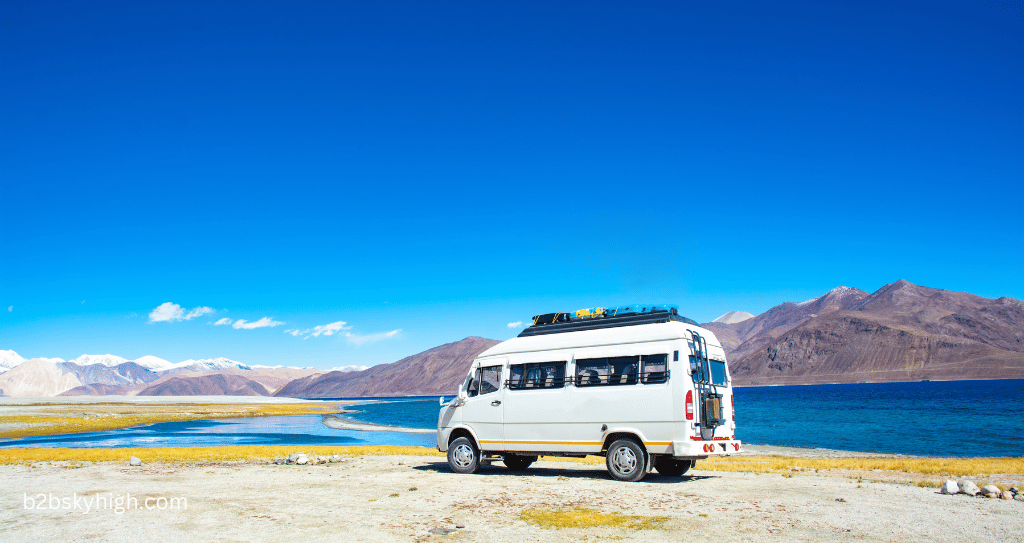
Circuit 1: Local Leh and Sham Valley
Typical stops: Sangam (confluence of the Indus and Zanskar), Magnetic Hill, Hall of Fame, Shanti Stupa, Leh Palace, and, on a longer Sham Valley day, Alchi, Likir and Lamayuru.
Operational notes:
- Local Leh is a day-one or day-two product, ideally kept light for acclimatisation.
- Sham Valley is a full day with long driving hours on good roads and is a good second-day product once guests have rested.
- This is the circuit where the union restriction on non-local vehicles bites hardest, so local registered vehicles matter most here.
Circuit 2: Nubra Valley via Khardung La
Typical stops: Khardung La, Diskit monastery, Hunder sand dunes and double-humped camel rides, Sumur, Panamik hot springs, and onward to Turtuk and the Tyakshi border area on extended itineraries.
Operational notes:
- Khardung La is a high pass: keep time at the top short, with no long photo stops for guests who are not acclimatised.
- Nubra is a 1N/2D minimum; Turtuk adds a long day and is worth a dedicated night when time allows.
- Standby vehicle in Diskit covers the whole valley.
- Camp meals in Nubra should be confirmed in advance for Indian Veg and Jain requirements.
Circuit 3: Pangong Tso via Shyok River or Chang La
Typical stops: Spangmik, Man, Merak, and the lake itself, reached either by the Shyok route from Nubra or by Chang La directly from Leh.
Operational notes:
- Nubra to Pangong via Shyok is a scenic route and lets agents sell a one-way loop (Leh – Nubra – Pangong – Leh), avoiding a repeat of the same road.
- Shyok water levels can rise through the day; early departures are safer.
- Chang La is the more direct route from Leh and is common for 1N/2D Pangong trips, though the road can be rough and weather-sensitive.
- Standby vehicle at Tangste covers the Pangong side. Camp meal pre-arrangement is as important here as in Nubra.
Circuit 4: Extended Circuit (Hanle, Umling La, Tso Moriri)
Typical stops: Hanle Dark Sky Reserve, Umling La Pass (widely marketed as the world’s highest motorable road), and Tso Moriri.
Operational notes:
- This is the most remote circuit and the one where vehicle quality matters most. 4×4 vehicles are recommended.
- Distances are long and services are thin, so fuel, food and communication planning need to be done before departure.
- Permits cover several protected areas, so passenger details must be accurate.
- Hanle is best sold for clear skies and astronomy, with dates set around the moon cycle where possible.
- Umling La is a seasonal extension and is covered under the upsell section below.
5. Logistics and Regulatory Checklist for B2B Ladakh Contracts
Before confirming any Ladakh contract, agents should check the following.
Acclimatisation rest. A compulsory 24 to 48 hour rest in Leh after arrival, with no high-pass travel in that window. This is non-negotiable for guest safety, and agents should build it into the itinerary and communicate it clearly to clients. Selling a Nubra transfer on day one is the fastest route to a medical incident and a complaint.
Driver duty limits. Mountain driving is tiring. Drivers should have reasonable daily driving limits and rest between long circuits. Back-to-back long days on the same driver increase risk. Where itineraries are heavy, ask for a second driver or a rest day.
Weather and pass monitoring. Daily checks on Khardung La, Chang La, Shyok and the Hanle road, with a plan B agreed in advance. Agents should expect the ground team to adjust departure times, sequence or route when needed, and should brief clients that this is a safety decision.
Luggage limits. Mountain vehicles have limited boot space, especially an Innova with a full passenger load. Sensible luggage limits per vehicle should be set: a soft-bag policy for circuits, with heavy suitcases stored at the Leh hotel. Large groups should plan a separate luggage vehicle.
Camp stay dining rules. Camps at Nubra and Pangong work on fixed meal timings and pre-ordered menus. Indian Veg and Jain meals should be confirmed at the time of booking, not on arrival. Remote camps cannot cook to order.
Connectivity. Prepaid mobile connections from outside Jammu & Kashmir and Ladakh typically do not work in the region; postpaid SIMs generally do, and coverage drops sharply outside Leh town. Share this with clients so family members know when to expect silence.
Documents. ID proof for every passenger, accurate names for permits, and, for foreign nationals, the relevant protected-area permit process.
Health. Advise guests with heart, lung or blood-pressure conditions to consult a doctor before booking. Keep a copy of medical details with the trip leader.
6. Master MICE, Group and Bike Expedition Workflow
Corporate adventure and MICE groups
- Fix the headcount early. Vehicle allocation depends on it, and Ladakh has a finite supply of Tempo Travellers in peak season.
- Split by vehicle type. Mix 12/16-seater tempos for the main group with SUVs for senior management or VIPs.
- Plan acclimatisation first. Build the first 24 to 48 hours around lighter activity such as local Leh, a team dinner or a short briefing.
- Sequence the circuit sensibly. Leh – Nubra – Pangong – Leh avoids road repetition and keeps energy high.
- Pre-arrange camps. Block Nubra and Pangong camps with dining confirmed for the whole group.
- Appoint a ground coordinator with a direct line to the dispatch desk.
- Share a day-by-day movement chart with timings, driver names, vehicle numbers and emergency contacts.
Bike convoys
Group bike trips are the most operationally demanding product in Ladakh.
- Bikes: Royal Enfield Himalayan 411, Scram and 452, at ₹1,400 to ₹2,200 net per bike per day.
- Backup support van with mechanic: mandatory for groups at ₹4,500 to ₹6,000 net per day. It carries luggage, spare parts, tools, oxygen and a fallback seat for any rider who is unwell or tired.
- Rider screening: confirm riding experience and fitness, particularly for high-pass days.
- Daily briefing: riders and the lead mechanic should agree the plan each morning, including fuel stops and weather decisions.
- Pass timing: start early; most mountain weather turns in the afternoon.
- Convoy discipline: a lead rider, a sweep rider and the van at the rear.
Communication and satellite phones
In India, civilian satellite phone use is tightly regulated and is not something an agent can simply arrange for a group. For remote itineraries, plan communication through the ground operator’s dispatch and standby network, and confirm in advance what communication arrangements are available on the Hanle and Tso Moriri side. Do not promise clients satellite connectivity unless the ground team has confirmed it is permitted and available.
Multi-camp group movement
Move the group on a fixed timetable: depart after breakfast, reach the camp before dark, and keep the evening programme short. Camps at altitude are cold at night; confirm bedding, heating and washroom arrangements for the entire group, not just the first few rooms.
7. High-Margin Transport Upsell Opportunities for Travel Agents
Ladakh has several upsells that improve both margin and guest experience without feeling like padding.
- VIP SUV upgrades. Move guests from an Innova Crysta to a Toyota Fortuner 4×4, or a higher-end executive vehicle where available. Price the premium per vehicle and present it as a comfort and safety upgrade for the remote circuits. Honeymooners and senior guests are the natural buyers.
- Umling La Pass extension. Add a Umling La excursion to the Hanle leg for guests who want the “highest motorable road” experience. It works best in the warmer months, which is covered in the FAQ section.
- Deluxe glamping upgrades. Offer upgraded camps at Pangong and Nubra with attached washrooms and better bedding. For many first-time visitors, camp quality shapes the entire memory of the trip.
- ATV rides at Hunder sand dunes. A short, high-satisfaction add-on in Nubra, easy to sell on the spot.
- Zanskar River rafting. A strong activity add-on for adventure and corporate groups, usually in the summer season.
- Bike add-ons for guests in cars. A single Royal Enfield day rental for a guest who wants a ride while the family travels by SUV.
Each of these is a high-margin line item that can be sold in the first quote stage or as an on-trip upgrade, and all of them are easiest to execute when the transport and activity are handled by the same ground partner.
8. Why Partner with Sky High Tourism as Your Preferred Ladakh Transport DMC
For agents choosing a partner, the question comes down to control, speed and trust.
- Direct Leh Union fleet access. Innova Crysta, Scorpio and Xylo SUVs, 12, 16 and 26-seater Tempo Travellers and Royal Enfield Himalayan 411 and 452 bikes, all coordinated directly and compliant with Leh Taxi Operators Union norms.
- Safety as standard. Oxygen cylinder kits in every vehicle, first-aid kits, and drivers who are trained in mountain safety and AMS protocol.
- Fast B2B quotes. Quote turnaround in under 10 minutes, which matters when a client is comparing three agents on WhatsApp.
- 24/7 on-ground dispatch from offices in Leh and Delhi, with a single point of contact for every trip.
- Transparent net pricing. Wholesale net rates with no hidden add-ons, so margins can be planned before a quote goes out.
- 100% white-label execution. Your logo at the airport, your brand on the trip, and driver NDAs that protect your client relationship.
- Permit and meal handling. ILP pre-clearance and pre-arranged Indian Veg and Jain meals at Nubra Valley and Pangong Tso camps.
- Airport assistance. 24/7 arrival support at Kushok Bakula Rimpoche Airport (IXL).
- Flexible B2B payment terms for registered trade partners.
Agents can review the full offering and request wholesale tariff cards at Sky High Tourism Ladakh B2B.
9. Frequently Asked Questions (FAQs for Travel Agents)
Q1. Can Delhi, Manali or Srinagar taxis drive inside Ladakh sightseeing spots? Generally, no. Outside taxis can usually bring guests to Ladakh, but local sightseeing and many inner circuits are reserved for Leh union-registered vehicles. Using a non-local vehicle for Leh local, Nubra or Pangong risks being stopped and a disrupted itinerary. Book a local, union-compliant vehicle for all in-Ladakh movement.
Q2. Is an oxygen cylinder available in every car? With Sky High Tourism, yes. A portable oxygen cylinder and first-aid kit are carried in every tour vehicle as standard, and drivers are trained to follow AMS protocol. Oxygen is a first-response measure, not a substitute for acclimatisation or medical care.
Q3. What are the best months for Umling La? Umling La is generally most accessible in the warmer months, roughly from June through September, depending on snow and road conditions in that year. Early and late season carry a higher risk of closures. Confirm with the ground team before selling dates.
Q4. What is the driver tipping guideline? Tipping is customary but not mandatory. Many groups tip the driver at the end of the circuit, with the amount depending on trip length, group size and service quality. Agents can brief clients that a modest tip is appreciated, and that it is voluntary.
Q5. What are the child safety rules at high altitude? Children, and especially infants and toddlers, are more vulnerable to altitude sickness and can deteriorate quickly. Advise parents to consult a paediatrician before booking, allow full acclimatisation, avoid very high passes on the first days, and keep the itinerary light. Agents should clearly discuss risk with families rather than push remote circuits for very young children.
Q6. How many days of acclimatisation should we plan? Plan a 24 to 48 hour rest in Leh before any high-pass travel. Keep day one light, with hydration, no alcohol and limited exertion.
Q7. How are ILPs handled for my clients? Share passenger names and ID details once; Sky High files and tracks the permits for protected regions (Nubra, Pangong, Hanle and Tso Moriri) and delivers physical copies on arrival. Foreign nationals follow a separate permit process, so mention nationality at the enquiry stage.
Q8. Is the service really white-label? Yes. Fleet coordination is unbranded, drivers sign NDAs, and the airport signboard carries the agent’s logo. Guests deal with your brand throughout.
10. Conclusion
Ladakh rewards agents who treat ground transport as the core of the product rather than a line item. The right partner holds union-compliant vehicles, puts oxygen and trained drivers in every car, clears permits before guests land, and keeps standby vehicles near the places where failures actually happen. The wrong one leaves you managing a crisis from a different time zone.
If you sell Ladakh, or plan to, register with Sky High Tourism at https://b2bskyhigh.com/ladakh to get instant wholesale transport tariff cards for SUVs, Tempo Travellers and Royal Enfield bikes, and see how a direct-fleet B2B transport DMC can protect your margins and your clients’ trips.
Important B2B Tariff & Operational Disclaimer:
All wholesale B2B net vehicle rates, transfer packages, and circuit estimates listed in this guide are indicative figures provided strictly for registered travel agents, tour operators, and adventure trip planners. Final transport tariffs vary based on Leh Taxi Operators Union seasonal rate revisions, high-altitude fuel surcharges, pass road clearances (Khardung La, Chang La, Umling La), and weather conditions. Please connect with the Sky High Tourism Ladakh operations desk at b2bskyhigh.com/ladakh to receive live, validated net tariffs for your upcoming group or FIT bookings.